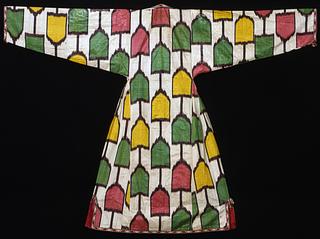
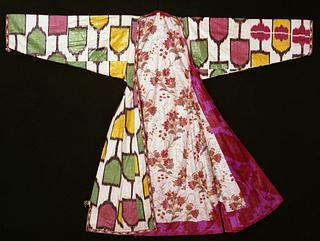
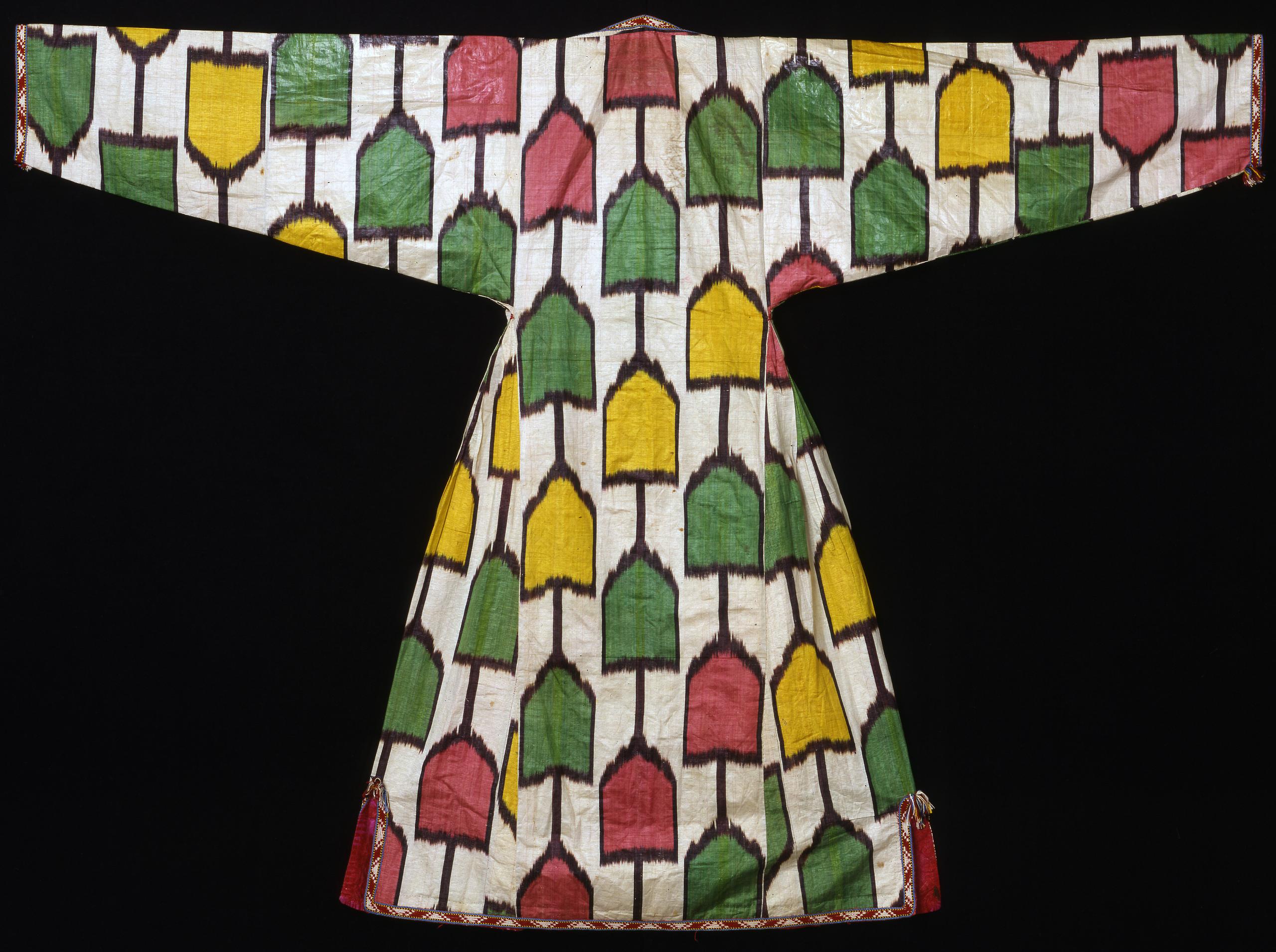
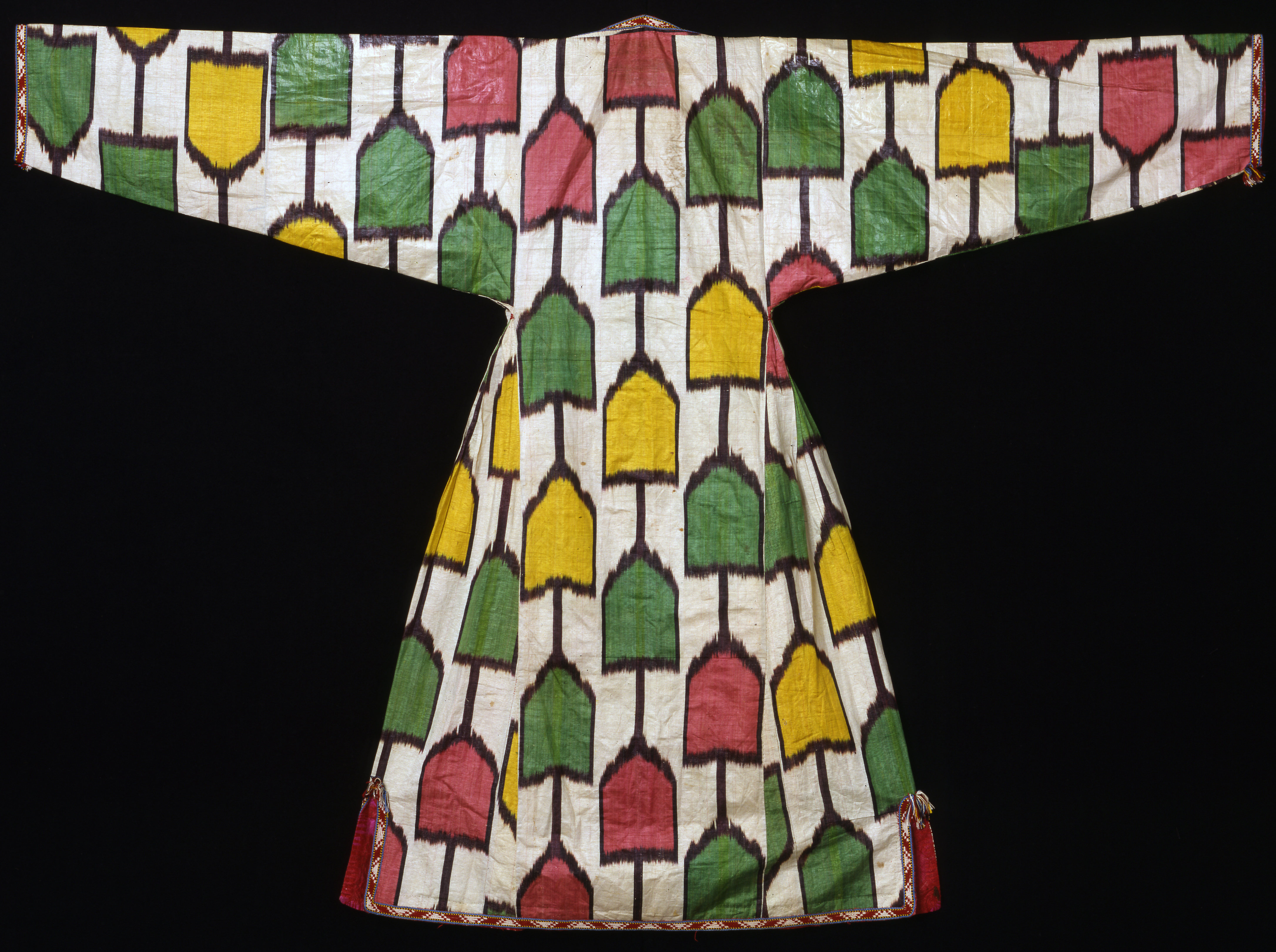
Ikat-dyed, coated, lined woman’s caftan (chapan), silk and cotton
Central Asia; end of 19th century
W: 184; L: 136 cm
Gift of Højesteretssagfører C. L. Davids Legat for Slægt og Venner
Gift of Højesteretssagfører C. L. Davids Legat for Slægt og Venner
Inventory number 11/1993
In contrast to slightly wider men’s caftans, this one is tapered at the waist and is intended for a woman. These caftans, which were used on festive occasions, are called khalat, from the Arabic word khil – “coat of honor.” When they are lined, like this one, they are called chapan.
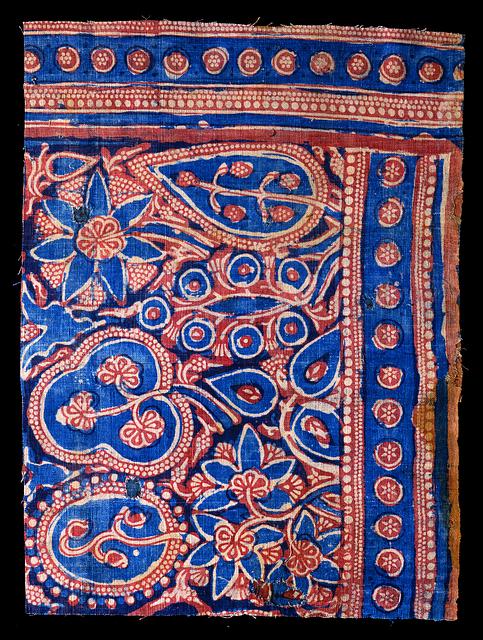
Central Asian caftans from around 1900 are often lined with colorful, printed cotton textiles made in Russia. Locally made tablet-woven bands are frequently sewn onto the openings at the front and at the armholes.
The patterns are often rooted in old nomad traditions or Indian boteh shapes that were later redefined. Most of the Central Asian ikat caftans have nonfigurative or highly abstract patterns.
Central Asian caftans from around 1900 are often lined with colorful, printed cotton textiles made in Russia. Locally made tablet-woven bands are frequently sewn onto the openings at the front and at the armholes.
The patterns are often rooted in old nomad traditions or Indian boteh shapes that were later redefined. Most of the Central Asian ikat caftans have nonfigurative or highly abstract patterns.