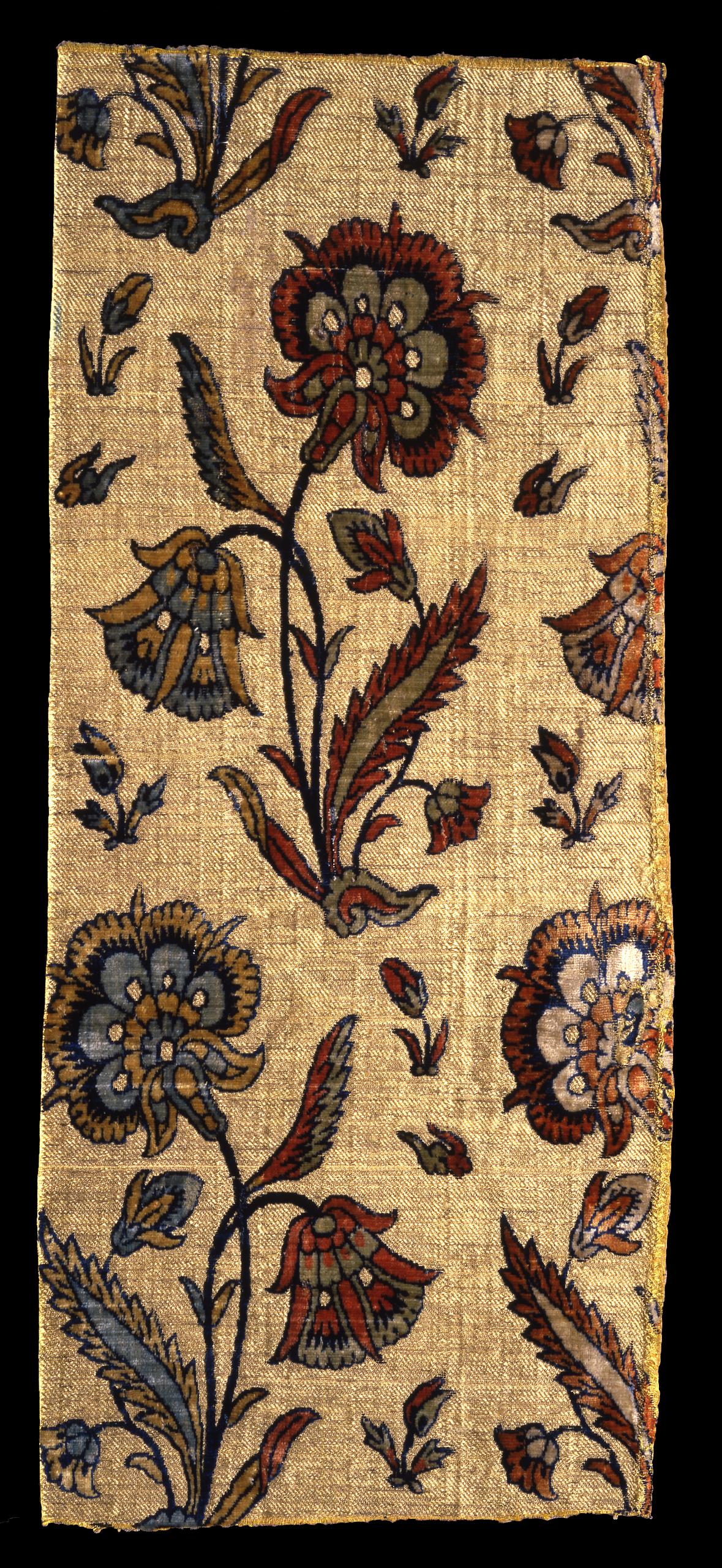
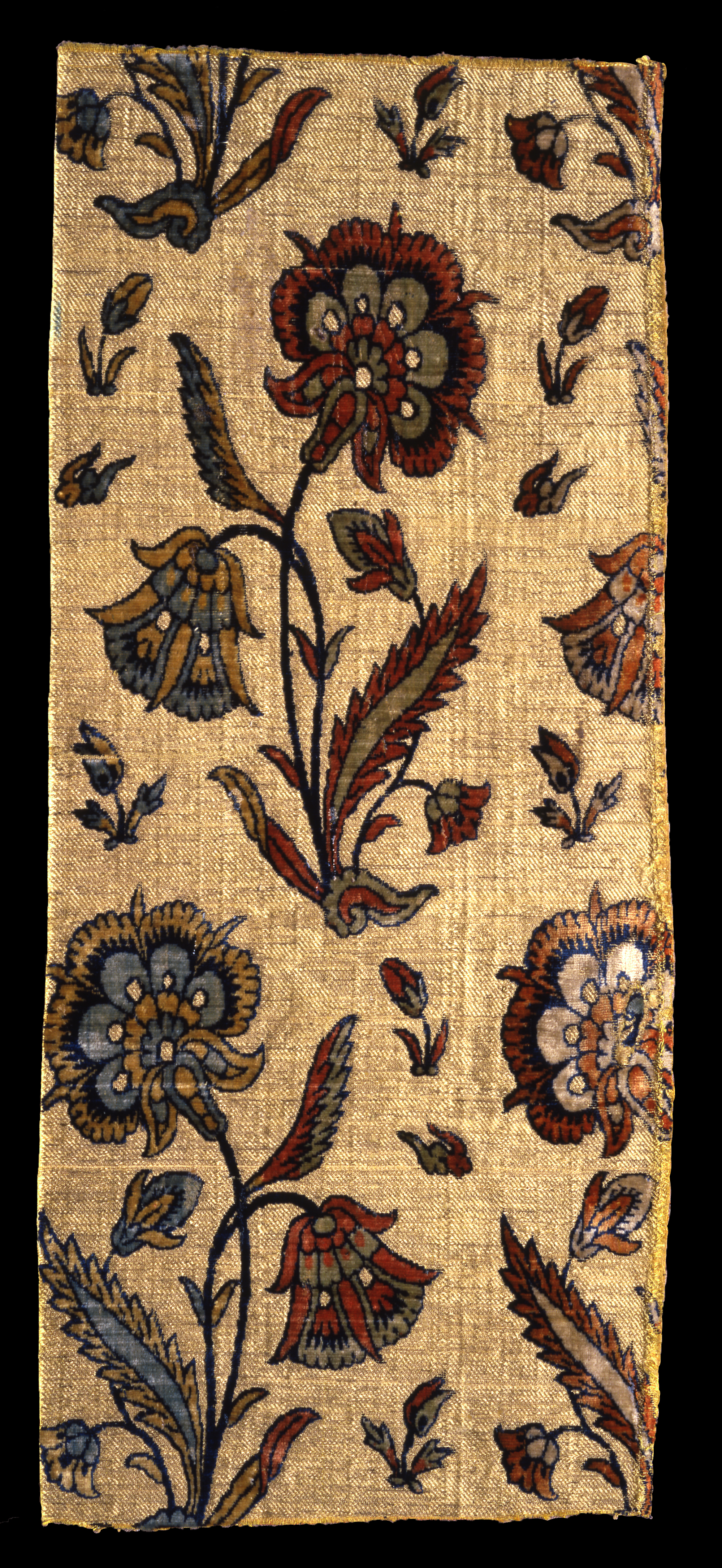
Fragment of a velvet textile, silk and metal lamella spun around a silk core
Iran; 1st half of 17th century
H: 55, W: 23 cm
Inventory number 8/1986
According to old Islamic sources, velvets were made in various places in Iran as early as the 14th century. The oldest preserved Persian velvets, however, date to the Safavid period in the 16th century. They have an unbelievably high quality and a richness of color that was never found in corresponding Turkish textiles.
The pattern of this velvet consists of elegant, intensely colored bouquets that are highly stylized, in typical Iranian fashion. The light ground also holds both little shoots with flowers and small two-colored versions of the wing-shaped cloud ornaments that were found in many other contexts in the Safavid period.
The pattern of this velvet consists of elegant, intensely colored bouquets that are highly stylized, in typical Iranian fashion. The light ground also holds both little shoots with flowers and small two-colored versions of the wing-shaped cloud ornaments that were found in many other contexts in the Safavid period.
Published in
Published in
Kjeld von Folsach: Islamic art. The David Collection, Copenhagen 1990, cat.no. 408;
Kjeld von Folsach and Anne-Marie Keblow Bernsted: Woven Treasures: Textiles from the World of Islam, The David Collection, Copenhagen 1993, cat.no. 35;
Kjeld von Folsach: Art from the World of Islam in The David Collection, Copenhagen 2001, cat.no. 664;
Kjeld von Folsach and Anne-Marie Keblow Bernsted: Woven Treasures: Textiles from the World of Islam, The David Collection, Copenhagen 1993, cat.no. 35;
Kjeld von Folsach: Art from the World of Islam in The David Collection, Copenhagen 2001, cat.no. 664;