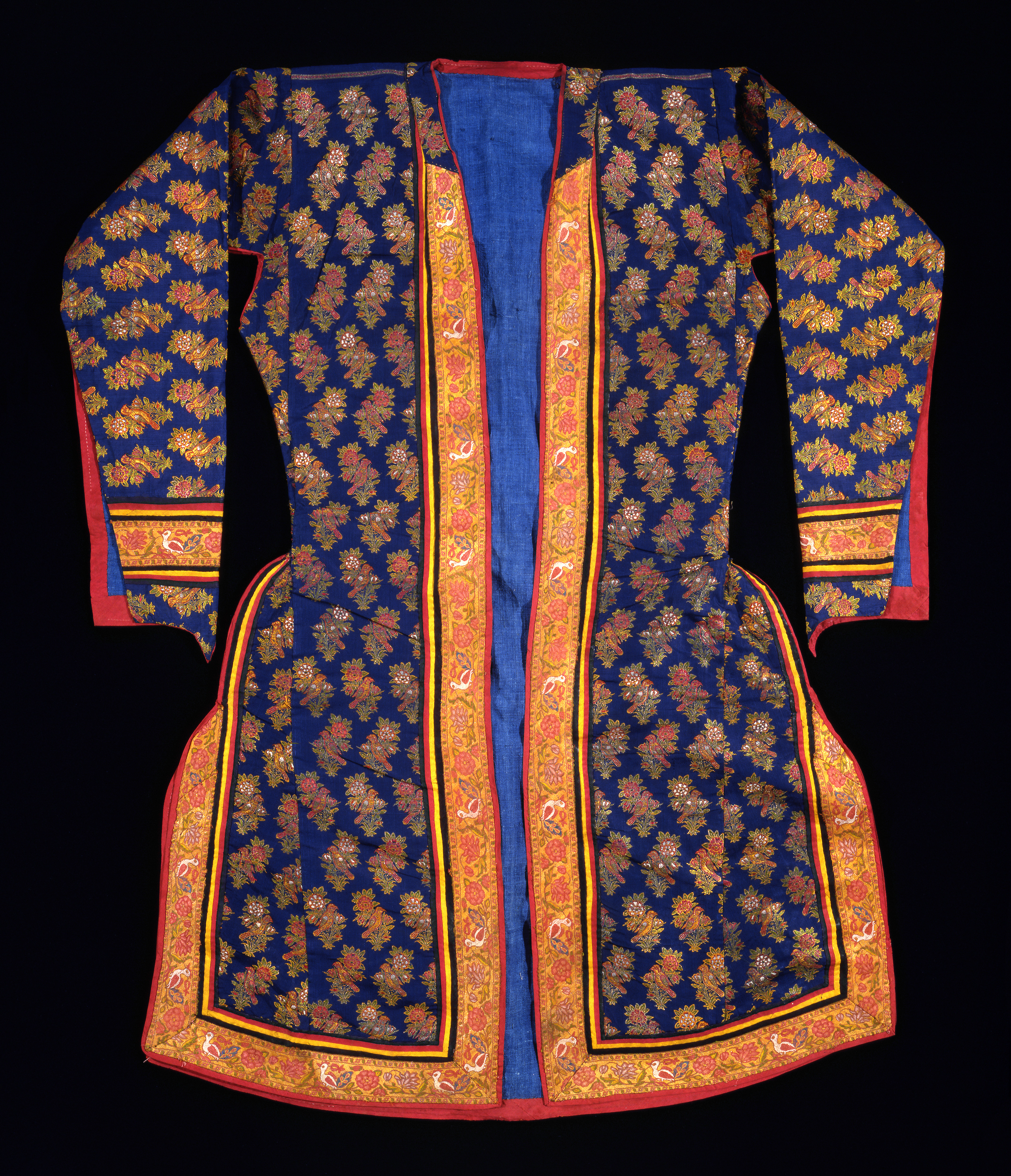
Man’s jacket, tabby, silk and metal lamella spun around a silk core
Iran; 17th-18th century
H: 108; Maximum W: 170 cm
Inventory number 41/1996
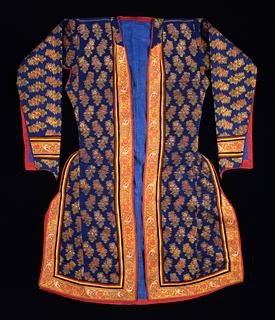
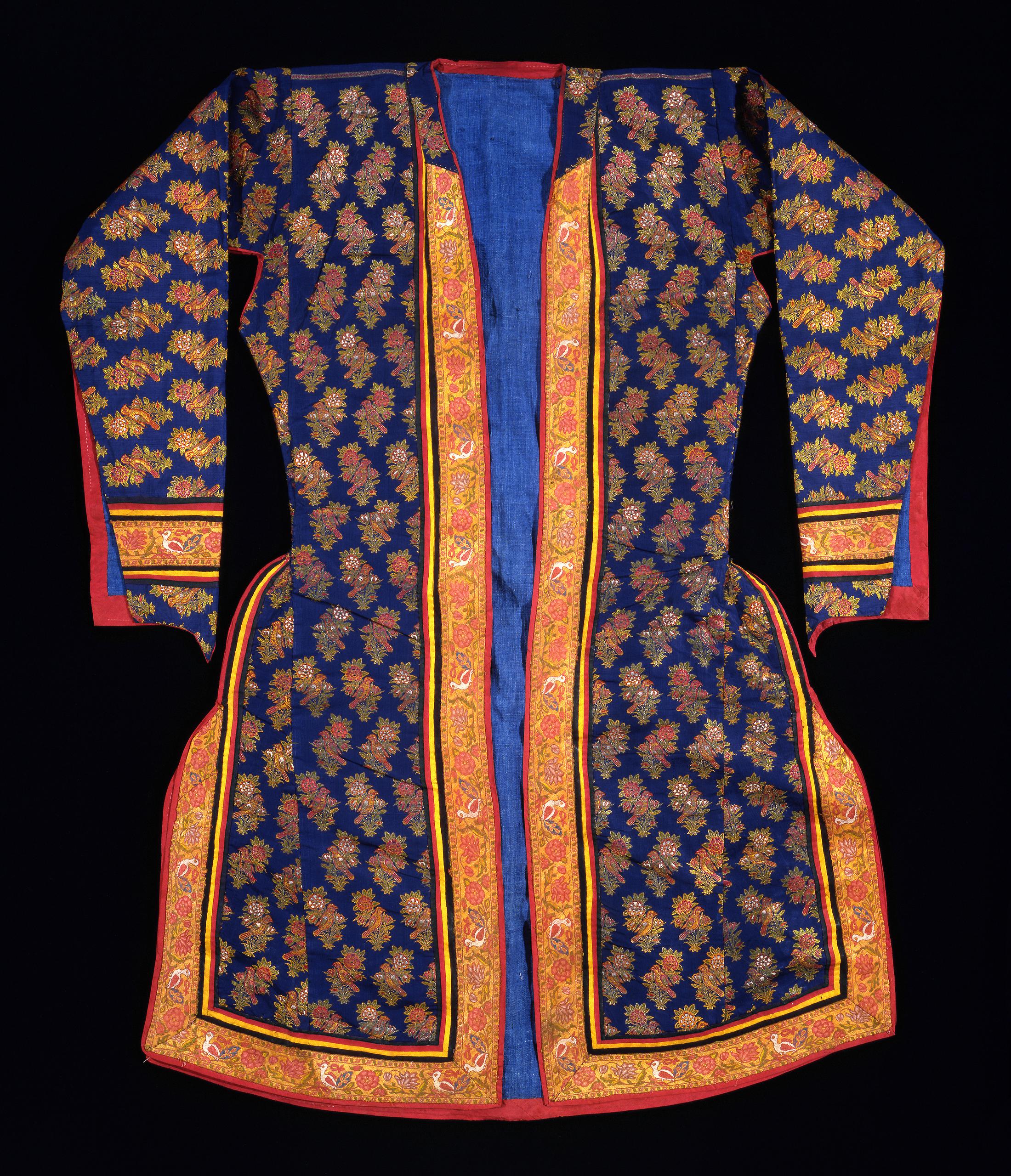
This well-preserved jacket has a typical Safavid shape: wide around the hips with slits at the sides, and with long, narrow sleeves, also slit.
Men’s fashion evidently changed very little under the Safavids and their successors, and judging from miniature paintings, jackets of this fairly short type were used throughout the 17th-18th century.
The blue fabric of the jacket and the bands along the edges have small-patterned versions of the textile motif that was so popular in the period: birds with flowers.
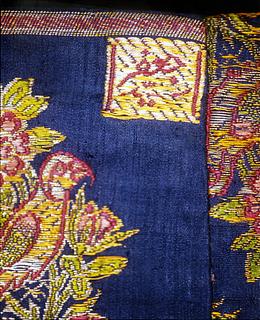
The weaver also wove his signature into the jacket, where “Sayid Jafar” can be found on the back of the right shoulder.
Men’s fashion evidently changed very little under the Safavids and their successors, and judging from miniature paintings, jackets of this fairly short type were used throughout the 17th-18th century.
The blue fabric of the jacket and the bands along the edges have small-patterned versions of the textile motif that was so popular in the period: birds with flowers.
The weaver also wove his signature into the jacket, where “Sayid Jafar” can be found on the back of the right shoulder.
Published in
Published in
Kjeld von Folsach: Art from the World of Islam in The David Collection, Copenhagen 2001, cat.no. 672;
Mentioned in Alexandra Van Puyvelde: “An 18th century Iranian coat (IS.Tx.2928) in the Royal Museums of Art and History: a case study for research on Persian dress from the Safawid to the Zand periods” in Bulletin des Musées Royaux d'Art et d'Histoire, Parc du Cinquantenaire, Bruxelles, 80, 2009, p. 102, no. 10;
Mentioned in Alexandra Van Puyvelde: “An 18th century Iranian coat (IS.Tx.2928) in the Royal Museums of Art and History: a case study for research on Persian dress from the Safawid to the Zand periods” in Bulletin des Musées Royaux d'Art et d'Histoire, Parc du Cinquantenaire, Bruxelles, 80, 2009, p. 102, no. 10;