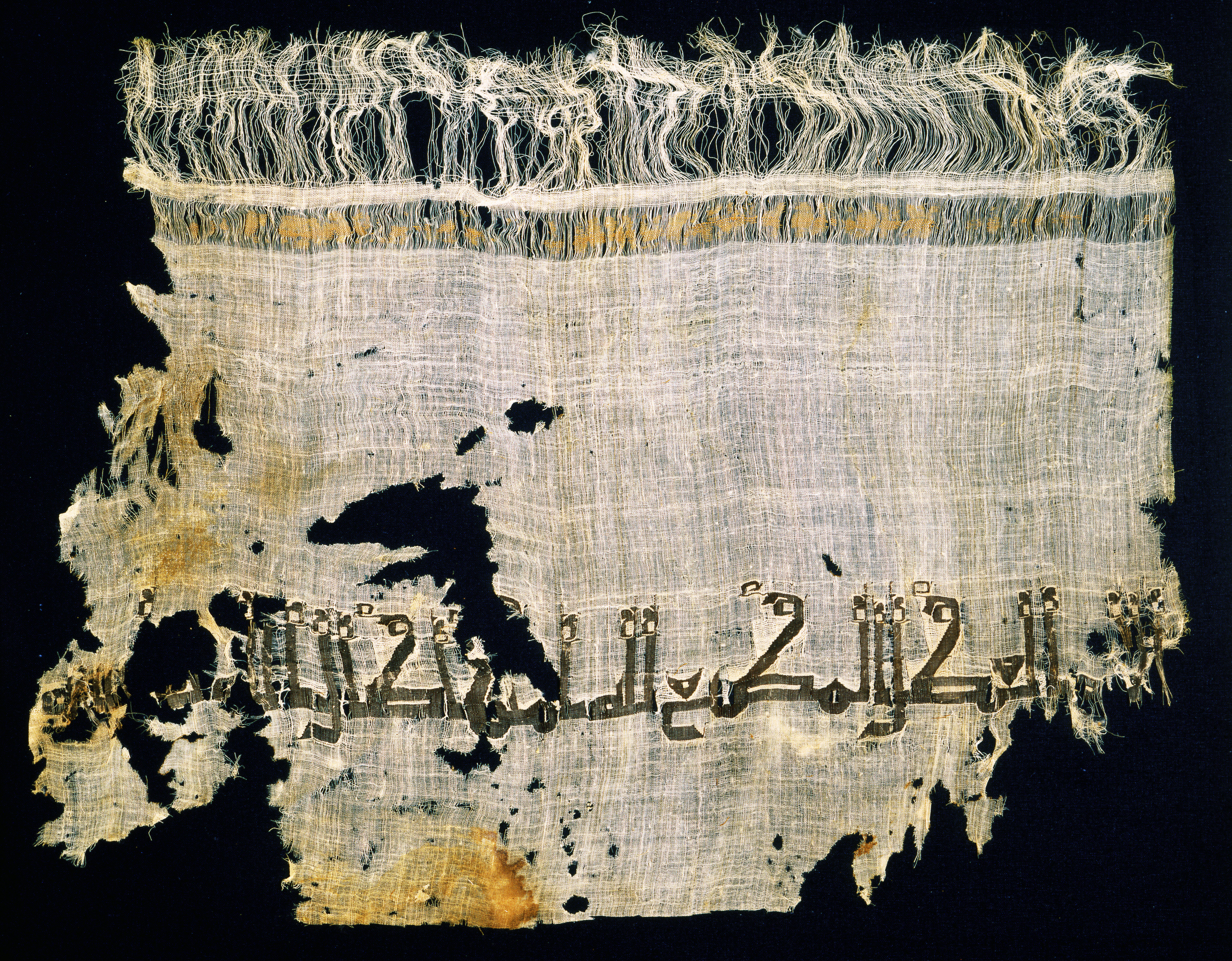
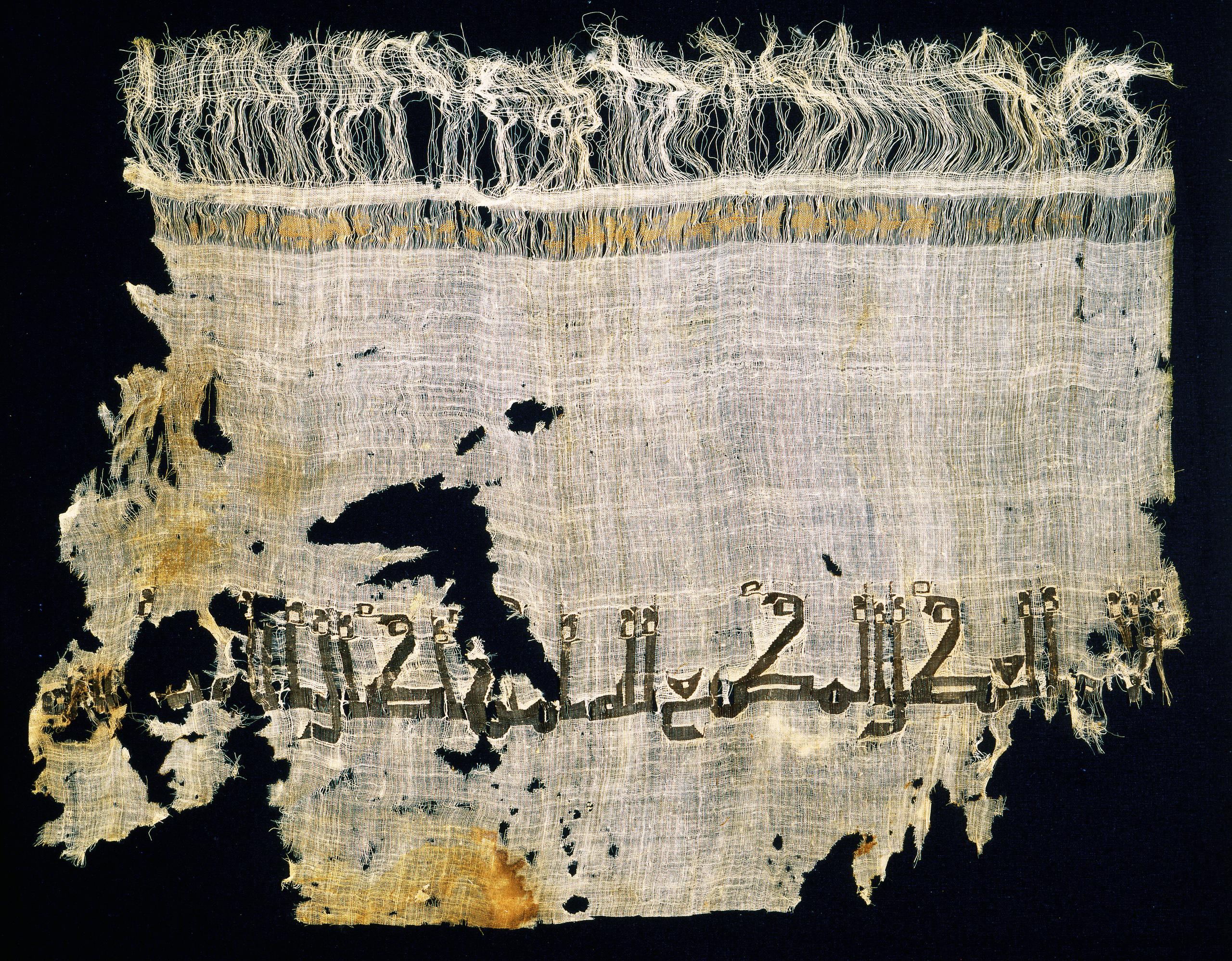
Tiraz, tabby-woven textile, linen with a tapestry-woven silk inscription
Egypt; between 946 and 974
H: 41; W: 52 cm
Inventory number 18/1971
True tiraz textiles are distinctive for their inscriptions, which often give the name of the ruling prince – in this case al-Muti, the Abbasid caliph who ruled between 946 and 974. The word tiraz means embroidery, and the term covers both the type of textile and the workshops where these textiles were woven.
The princes controlled the vast majority of tiraz workshops, something that yielded them an enormous profit. They also decided who was allowed to wear a tiraz, which gave the owner great prestige, not unlike a modern order.
In 696, the Fatimids conquered Egypt, which had some of the finest tiraz workshops. This is one of the last textiles woven there for the Abbasids.
The princes controlled the vast majority of tiraz workshops, something that yielded them an enormous profit. They also decided who was allowed to wear a tiraz, which gave the owner great prestige, not unlike a modern order.
In 696, the Fatimids conquered Egypt, which had some of the finest tiraz workshops. This is one of the last textiles woven there for the Abbasids.
Published in
Published in
Probably Sotheby’s, London, 8/12-1970, lot 180;
Kjeld von Folsach and Anne-Marie Keblow Bernsted: Woven Treasures: Textiles from the World of Islam, David Collection, Copenhagen 1993, cat.no. 4;
Kjeld von Folsach: “Textiles and society” in Carpet and textile art, 1994, 1. Hali annual, p. 20, fig. 10;
Kjeld von Folsach, Torben Lundbæk and Peder Mortensen (eds.): Sultan, Shah and Great Mughal: the history and culture of the Islamic world, The National Museum, Copenhagen 1996, cat.no. 67;
Kjeld von Folsach: Art from the World of Islam in The David Collection, Copenhagen 2001, cat.no. 629;
Kjeld von Folsach and Anne-Marie Keblow Bernsted: Woven Treasures: Textiles from the World of Islam, David Collection, Copenhagen 1993, cat.no. 4;
Kjeld von Folsach: “Textiles and society” in Carpet and textile art, 1994, 1. Hali annual, p. 20, fig. 10;
Kjeld von Folsach, Torben Lundbæk and Peder Mortensen (eds.): Sultan, Shah and Great Mughal: the history and culture of the Islamic world, The National Museum, Copenhagen 1996, cat.no. 67;
Kjeld von Folsach: Art from the World of Islam in The David Collection, Copenhagen 2001, cat.no. 629;
.jpg)