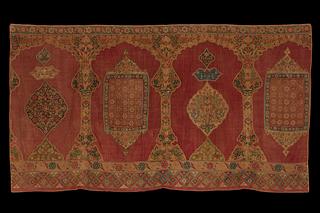
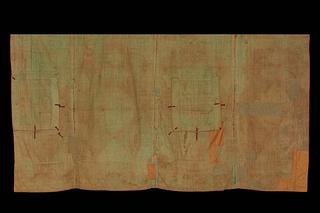
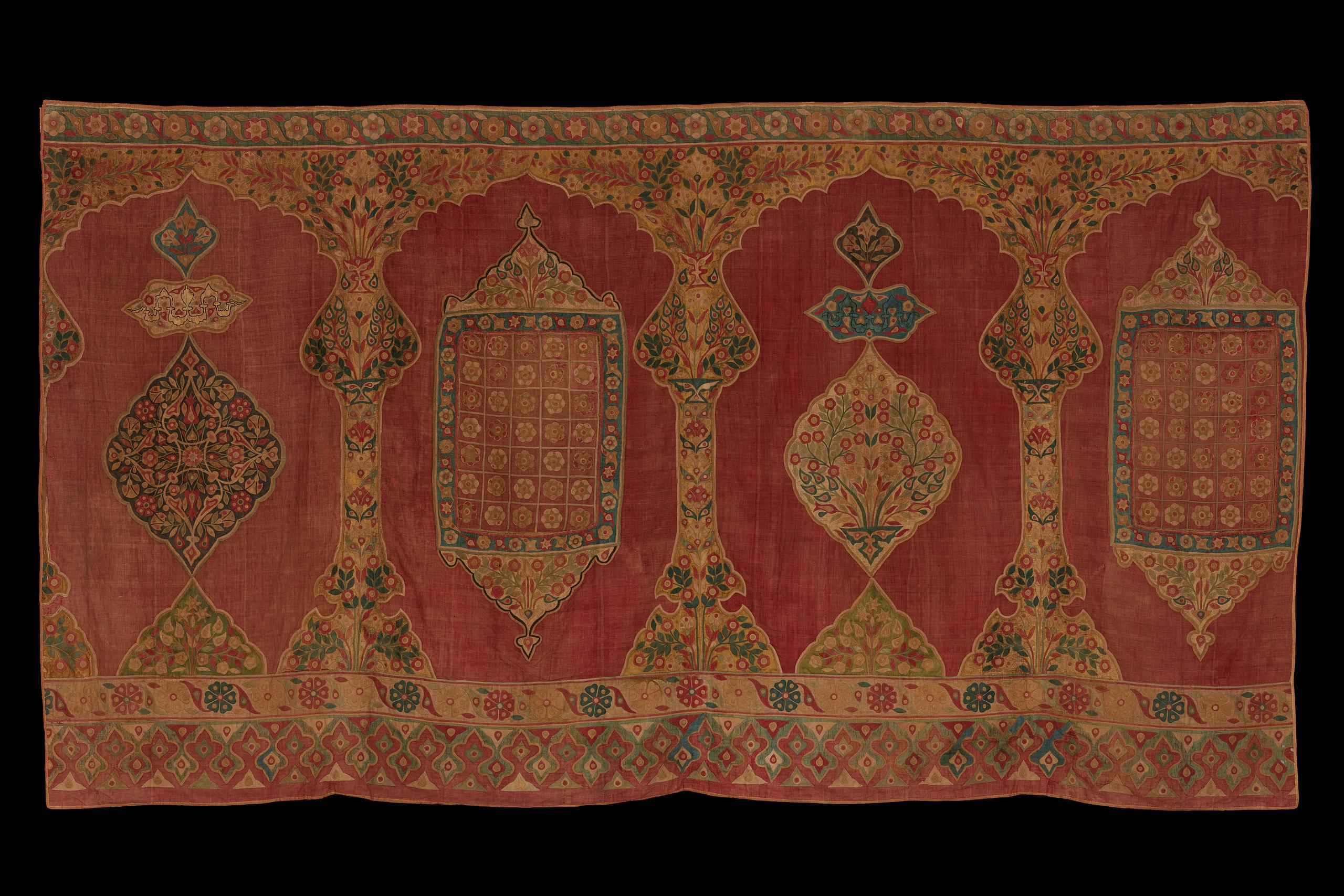
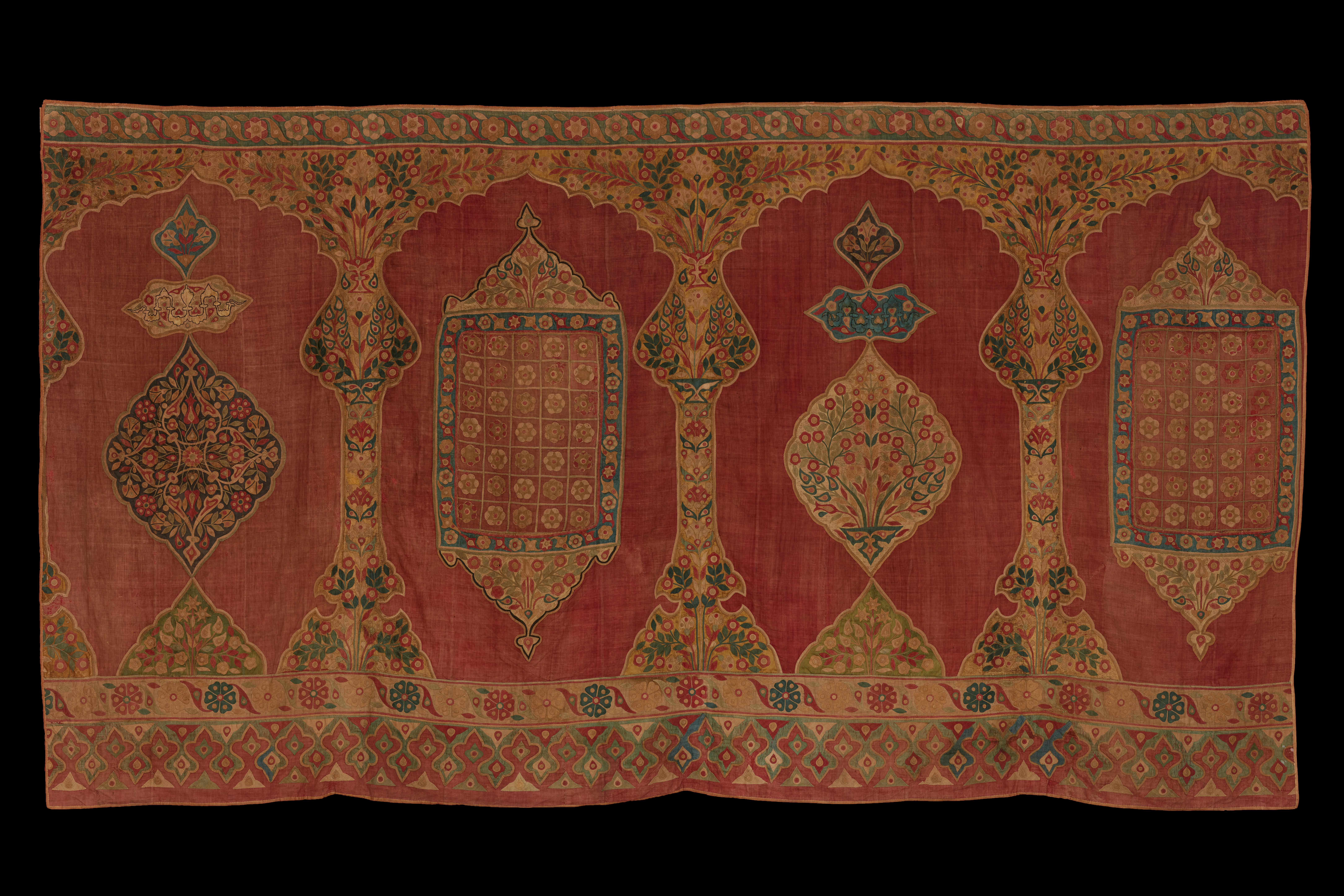
Fragment of a cotton tent with decorations in silk, cotton and gilt leather
Turkey, Istanbul; second half of the 17th century
H: 188; W: 342 cm
Inventory number 31/2019
Tents were a central element in Islamic court culture, not least among the Ottomans. This fragment is from the inner wall of an official Ottoman tent of the type made at the sultans’ tent workshops in Istanbul and used primarily on campaigns.
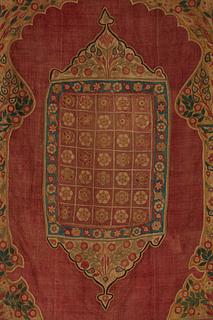
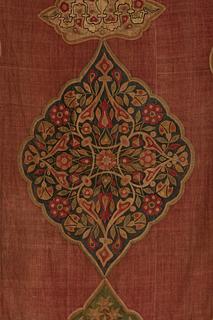
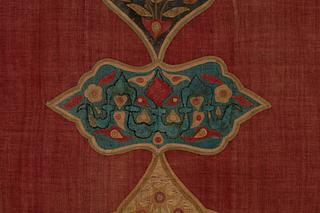
The fragment is adorned with four columned niches. Two of the niches contain windows with ‘shutters’ originally designed to be rolled up. In the other two niches, the central decorative element is a large, rhomboid cartouche. The floral decorations extending across the cartouches, columns and arches feature carnations and tulips. Native to Turkey, these plants reflect an Ottoman enthusiasm for the local Anatolian flora – a sentiment also expressed in Iznik pottery from approximately 1540 and up through the seventeenth century (2/1962). Similar applications with columned niches covered by local flora are seen, for example, on an Ottoman prayer rug from the seventeenth century (18/1989).
The size of the original tent cannot be determined from the fragment, but the decoration itself indicates that the tent belonged to a relatively high-ranking person, albeit not one from the inner circle of power.1 A number of preserved tents with closely related decorations can be traced back to the Turkish wars in Central and Eastern Europe in the last decades of the seventeenth century, such as the Ottoman siege of Vienna in 1683 and the Battle of Mohács in Hungary in 1687.
The fragment is adorned with four columned niches. Two of the niches contain windows with ‘shutters’ originally designed to be rolled up. In the other two niches, the central decorative element is a large, rhomboid cartouche. The floral decorations extending across the cartouches, columns and arches feature carnations and tulips. Native to Turkey, these plants reflect an Ottoman enthusiasm for the local Anatolian flora – a sentiment also expressed in Iznik pottery from approximately 1540 and up through the seventeenth century (2/1962). Similar applications with columned niches covered by local flora are seen, for example, on an Ottoman prayer rug from the seventeenth century (18/1989).
The size of the original tent cannot be determined from the fragment, but the decoration itself indicates that the tent belonged to a relatively high-ranking person, albeit not one from the inner circle of power.1 A number of preserved tents with closely related decorations can be traced back to the Turkish wars in Central and Eastern Europe in the last decades of the seventeenth century, such as the Ottoman siege of Vienna in 1683 and the Battle of Mohács in Hungary in 1687.
Published in
Published in
Kent Antiques: Islamic and Indian Art: Works of art from the Islamic and Indian worlds including orientalist modern and contemporary paintings, [texts by Bora Keskiner], London 2019, cat.no. 40;
Kjeld von Folsach, Joachim Meyer and Peter Wandel: Fighting, Hunting, Impressing: Arms and Armour from the Islamic World 1500–1850, The David collection, Copenhagen 2021, cat.no. 9;
Footnotes
Footnotes
1.
Kjeld von Folsach, Joachim Meyer, Peter Wandel: Fighting, Hunting, Impressing: Arms and Armour from the Islamic World 1500–1850, Copenhagen 2021, cat. 9.