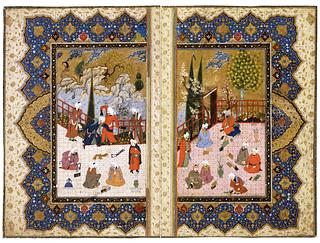
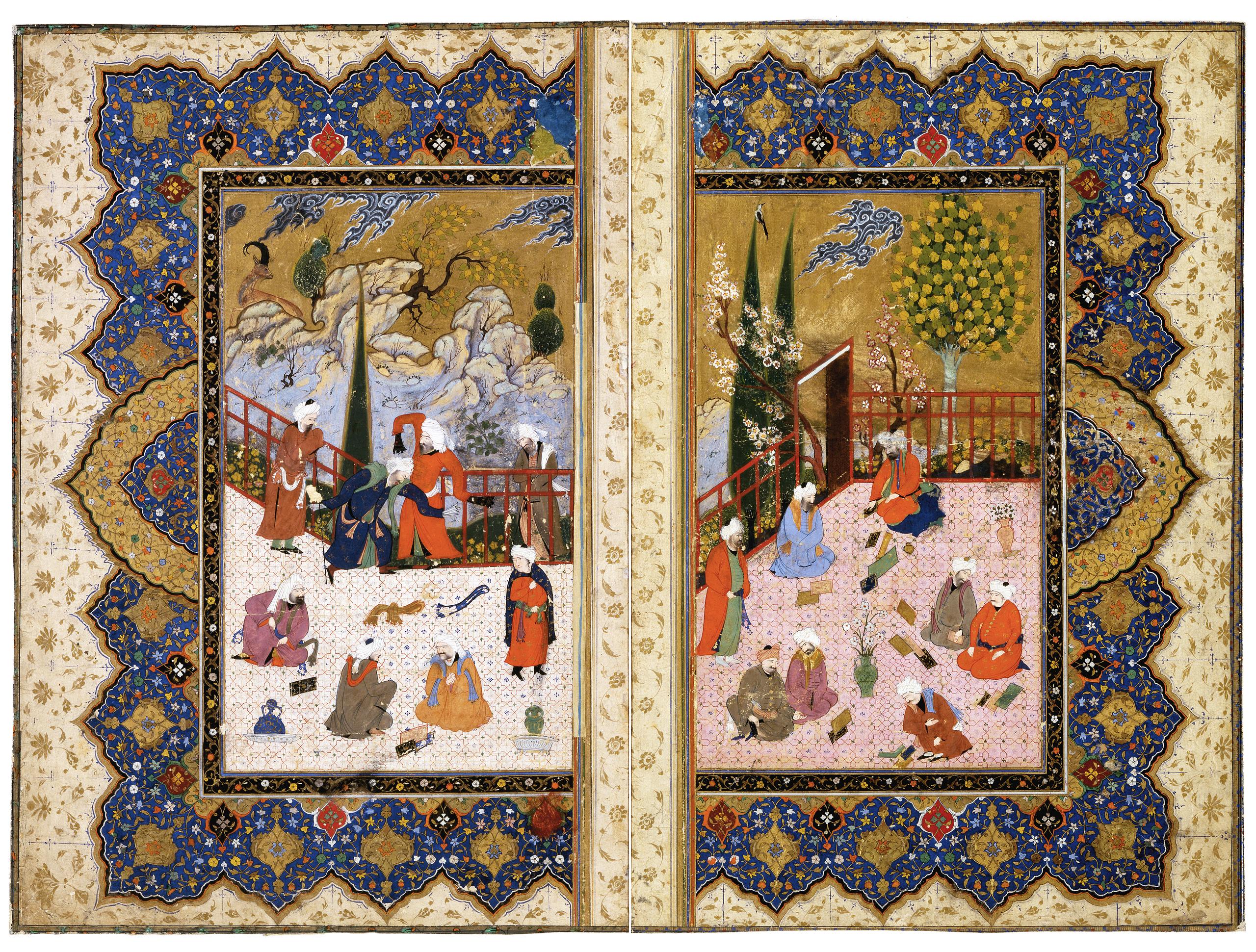
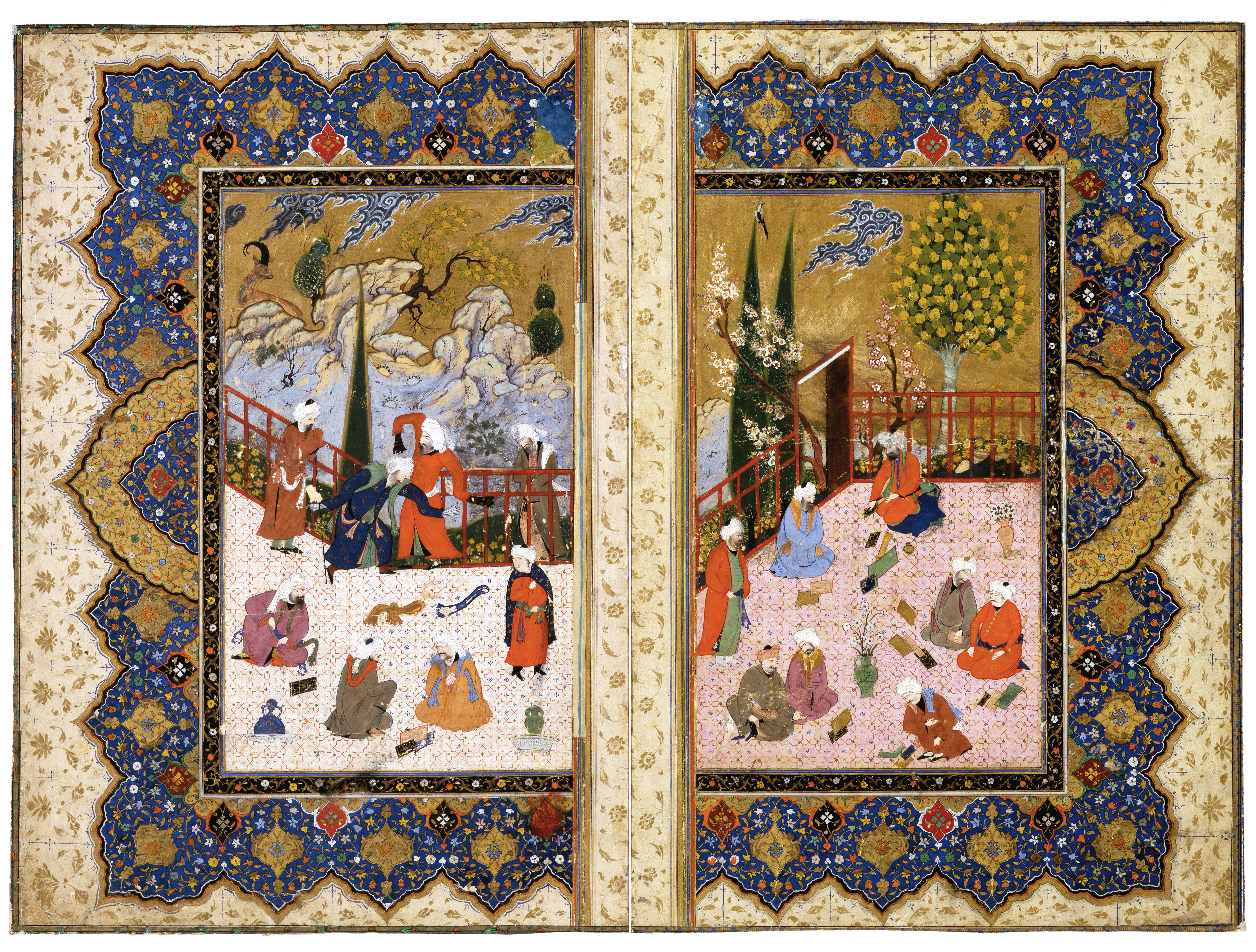
Double frontispiece painting for an unknown manuscript. ‘A Gathering of Learned Men on a Terrace’
Iran, Isfahan; c. 1600
Each leaf: 42 × 28.5 cm
Inventory number 18/1970 & 29/1962
When 17-year-old Shah Abbas (1588-1629) began his reign, a new style also made its advent in painting. It was broadly termed the Isfahan style because the Safavid capital had been moved to this city shortly after Abbas assumed the throne.
According to information on the back of one of the miniatures, the manuscript is based on the wisdom of philosophers of Antiquity. The motif is in fact a group of learned men, some of whom seem to be mystics in a trance, gathered on a terrace with a mountain landscape as a backdrop. While the composition itself is in keeping with that of older Safavid painting, the figures – with their large turbans and individual, often mannered positions – are more an expression of the Isfahan style.
According to information on the back of one of the miniatures, the manuscript is based on the wisdom of philosophers of Antiquity. The motif is in fact a group of learned men, some of whom seem to be mystics in a trance, gathered on a terrace with a mountain landscape as a backdrop. While the composition itself is in keeping with that of older Safavid painting, the figures – with their large turbans and individual, often mannered positions – are more an expression of the Isfahan style.
Published in
Published in
Gaston Migeon: Exposition des arts musulmans au Musée des arts décoratifs, Paris 1903, pl. 96 (only 18/1970);
Art from the World of Islam. 8th-18th century, Louisiana, Humlebæk 1987, cat.no. 240;
Kjeld von Folsach: Islamic art. The David Collection, Copenhagen 1990, cat.no. 33;
Kjeld von Folsach, Torben Lundbæk and Peder Mortensen (eds.): Sultan, Shah and Great Mughal: the history and culture of the Islamic world, The National Museum, Copenhagen 1996, cat.no. 281;
Kjeld von Folsach: Art from the World of Islam in The David Collection, Copenhagen 2001, cat.no. 45;
Sheila S. Blair and Jonathan M. Bloom (eds.): Cosmophilia. Islamic Art from the David Collection, Copenhagen, McMullen Museum of Art, Boston College, Boston 2006, cat.no. 4;
Kjeld von Folsach: For the Privileged Few: Islamic Miniature Painting from The David Collection, Louisiana, Humlebæk 2007, cat.no. 77;
Joachim Meyer and Peter Wandel: Sufisme: islams mystiske vej, Davids Samling, København 2011, pp. 10-12;
Art from the World of Islam. 8th-18th century, Louisiana, Humlebæk 1987, cat.no. 240;
Kjeld von Folsach: Islamic art. The David Collection, Copenhagen 1990, cat.no. 33;
Kjeld von Folsach, Torben Lundbæk and Peder Mortensen (eds.): Sultan, Shah and Great Mughal: the history and culture of the Islamic world, The National Museum, Copenhagen 1996, cat.no. 281;
Kjeld von Folsach: Art from the World of Islam in The David Collection, Copenhagen 2001, cat.no. 45;
Sheila S. Blair and Jonathan M. Bloom (eds.): Cosmophilia. Islamic Art from the David Collection, Copenhagen, McMullen Museum of Art, Boston College, Boston 2006, cat.no. 4;
Kjeld von Folsach: For the Privileged Few: Islamic Miniature Painting from The David Collection, Louisiana, Humlebæk 2007, cat.no. 77;
Joachim Meyer and Peter Wandel: Sufisme: islams mystiske vej, Davids Samling, København 2011, pp. 10-12;
Miniature Paintings
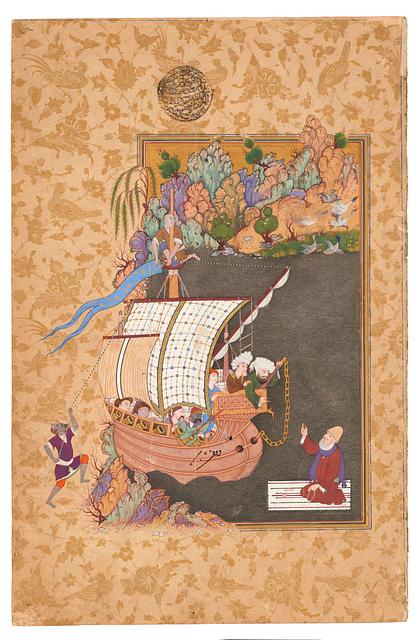
Miniature from a copy of Sadi’s Bustan. ‘The Dervish from Faryab Crosses the River on his Rug,’ attributed to Habiballah
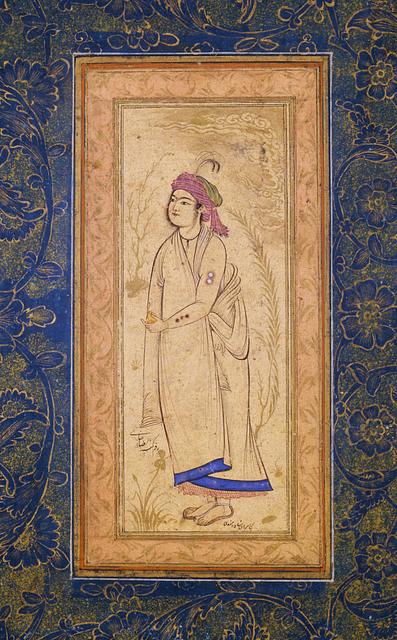
Partly colored drawing pasted on an album leaf. ‘Young Prince with Brands on his Arm’
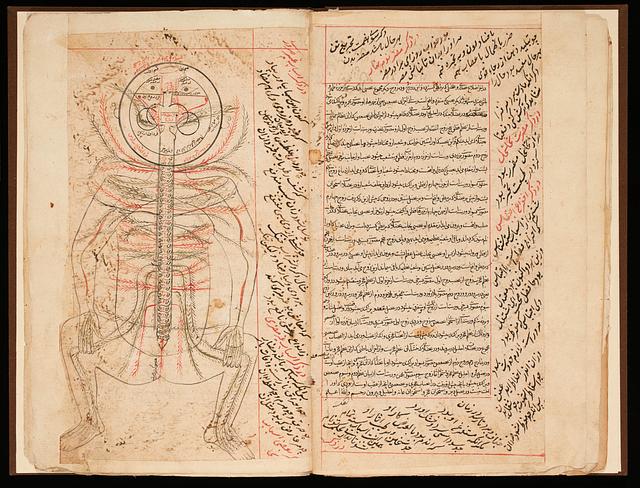
A copy of Mansur ibn Ilyas’s Tashrih-i mansuri (25 hand-written + 10 printed leaves). First shown leaf: Fol. 11r, Man seen from behind
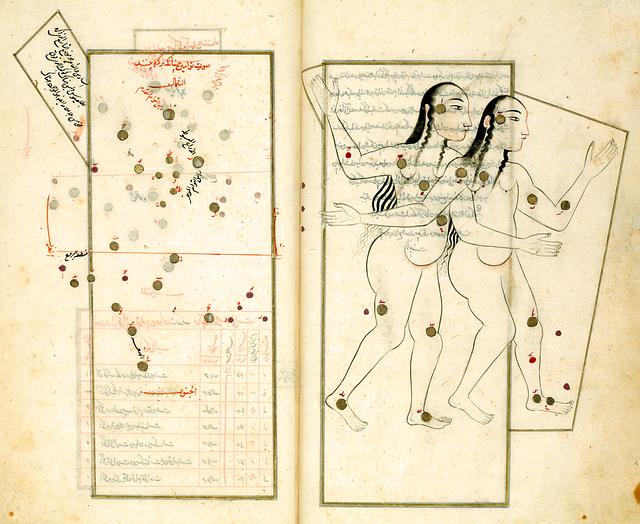
‘The Constellation Gemini’. Miniature in an illustrated copy of al-Sufi’s Kitab suwar al-kawakib (The Book of Fixed Stars)