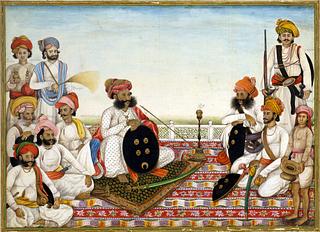
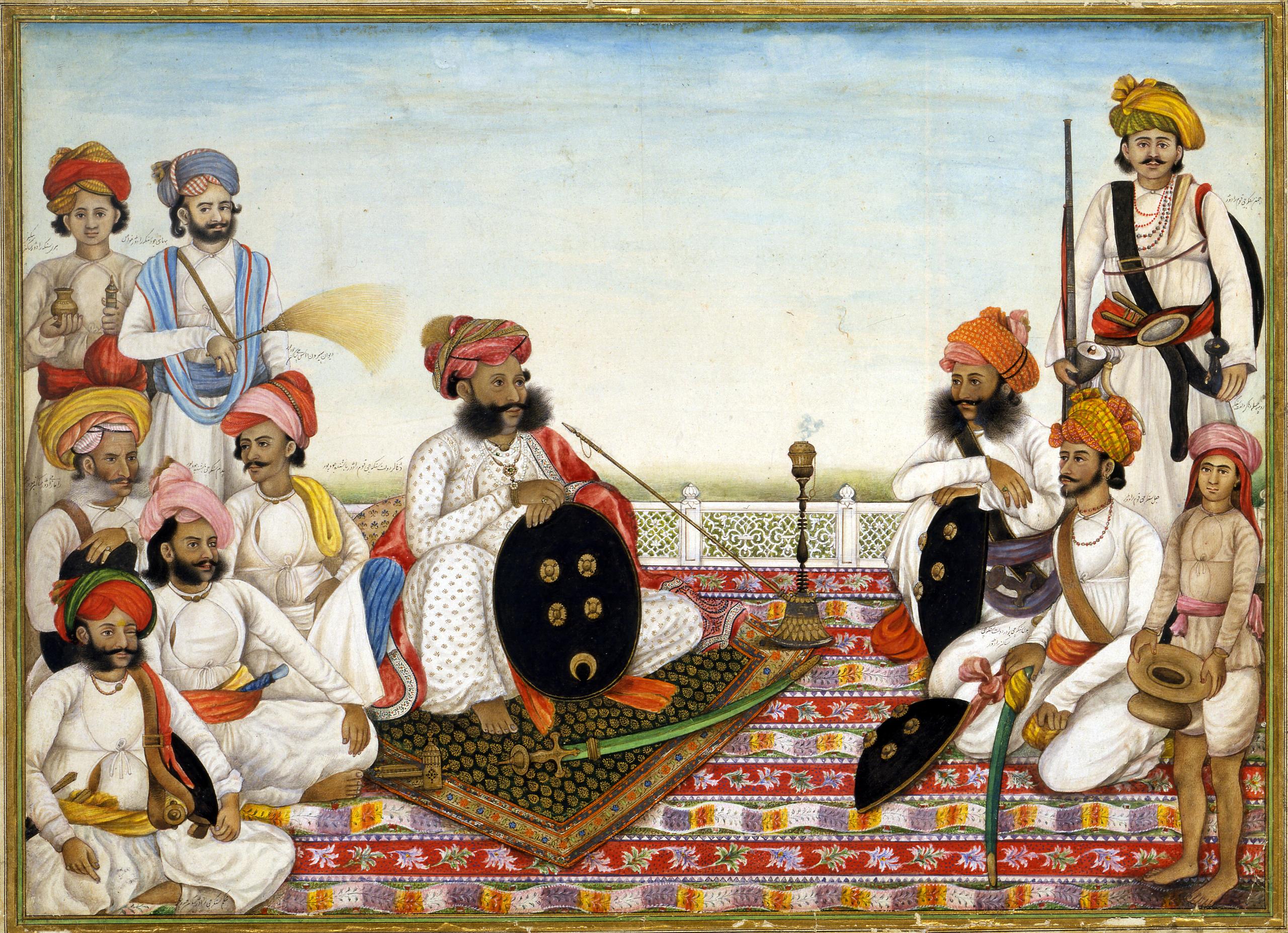
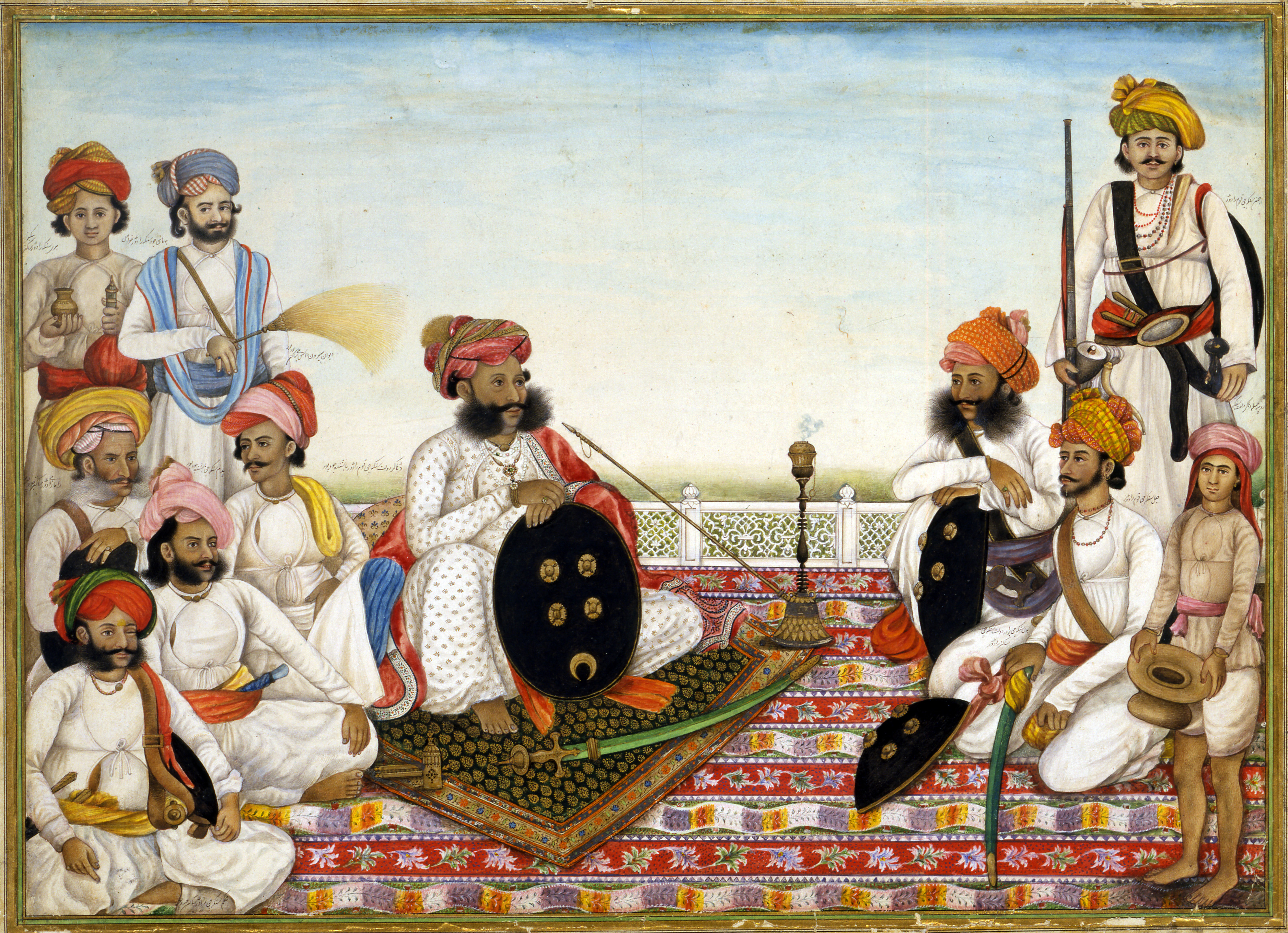
Miniature. ‘Thakur Dawlat Singh Among Courtiers’
India, Delhi; c. 1825
Miniature: 27.6 × 38.5 cm
Inventory number 19/1992
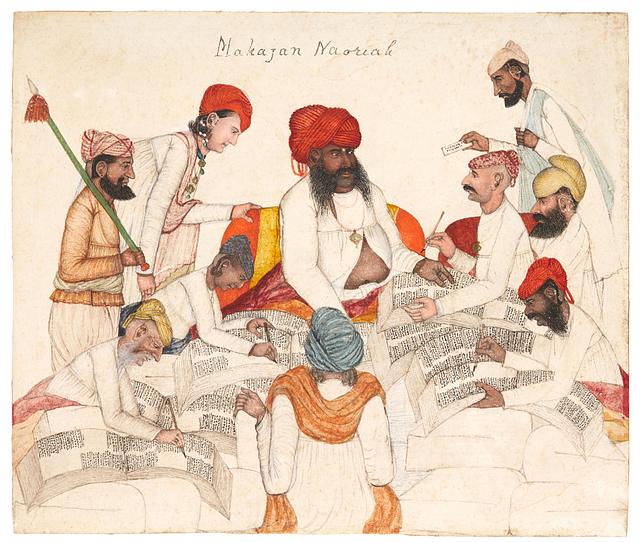
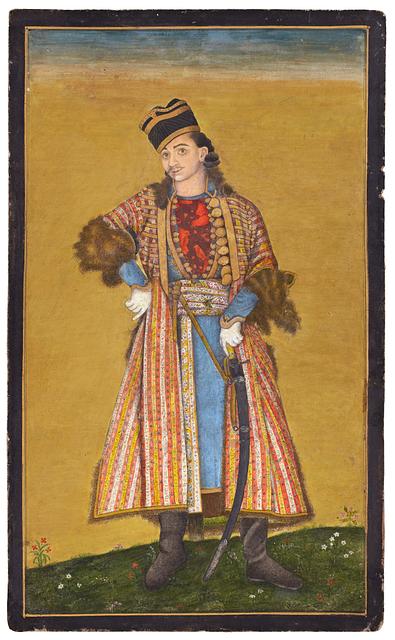
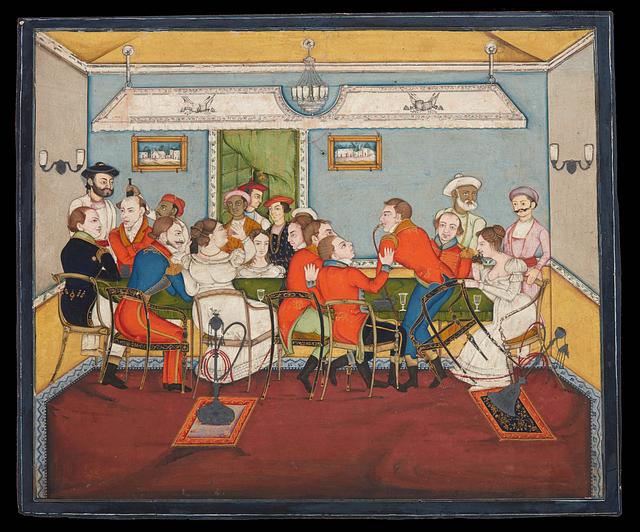
European influence on Indian painting was tangible from the 16th century, but at the end of the 18th, it became even more pronounced. French and British tradesmen and civil servants commissioned work directly from Indian artists, and they expected a result that resembled European art. This was the beginning of Company painting, named after the East India Company, the commercial forerunner of Britain’s takeover of India in 1858.
The Indian leader from Jodhpur and his men, all of them identified by name, were rendered painstakingly and with great individuality. The painting has been attributed to Ghulam Ali Khan.
The Indian leader from Jodhpur and his men, all of them identified by name, were rendered painstakingly and with great individuality. The painting has been attributed to Ghulam Ali Khan.
Published in
Published in
Sotheby’s, London, 30/4-1992, lot 264;
Kjeld von Folsach: Art from the World of Islam in The David Collection, Copenhagen 2001, cat.no. 84;
Kjeld von Folsach: For the Privileged Few: Islamic Miniature Painting from The David Collection, Louisiana, Humlebæk 2007, cat.no. 131;
Ravinder Reddy: Arms and armour of India, Nepal and Sri Lanka: types, decoration and symbolism, London 2018, p. 44;
Kjeld von Folsach, Joachim Meyer and Peter Wandel: Fighting, Hunting, Impressing. Arms and Armour from the Islamic World 1500-1850, The David Collection, Copenhagen 2021, fig. 32, p. 94;
Kjeld von Folsach: Art from the World of Islam in The David Collection, Copenhagen 2001, cat.no. 84;
Kjeld von Folsach: For the Privileged Few: Islamic Miniature Painting from The David Collection, Louisiana, Humlebæk 2007, cat.no. 131;
Ravinder Reddy: Arms and armour of India, Nepal and Sri Lanka: types, decoration and symbolism, London 2018, p. 44;
Kjeld von Folsach, Joachim Meyer and Peter Wandel: Fighting, Hunting, Impressing. Arms and Armour from the Islamic World 1500-1850, The David Collection, Copenhagen 2021, fig. 32, p. 94;