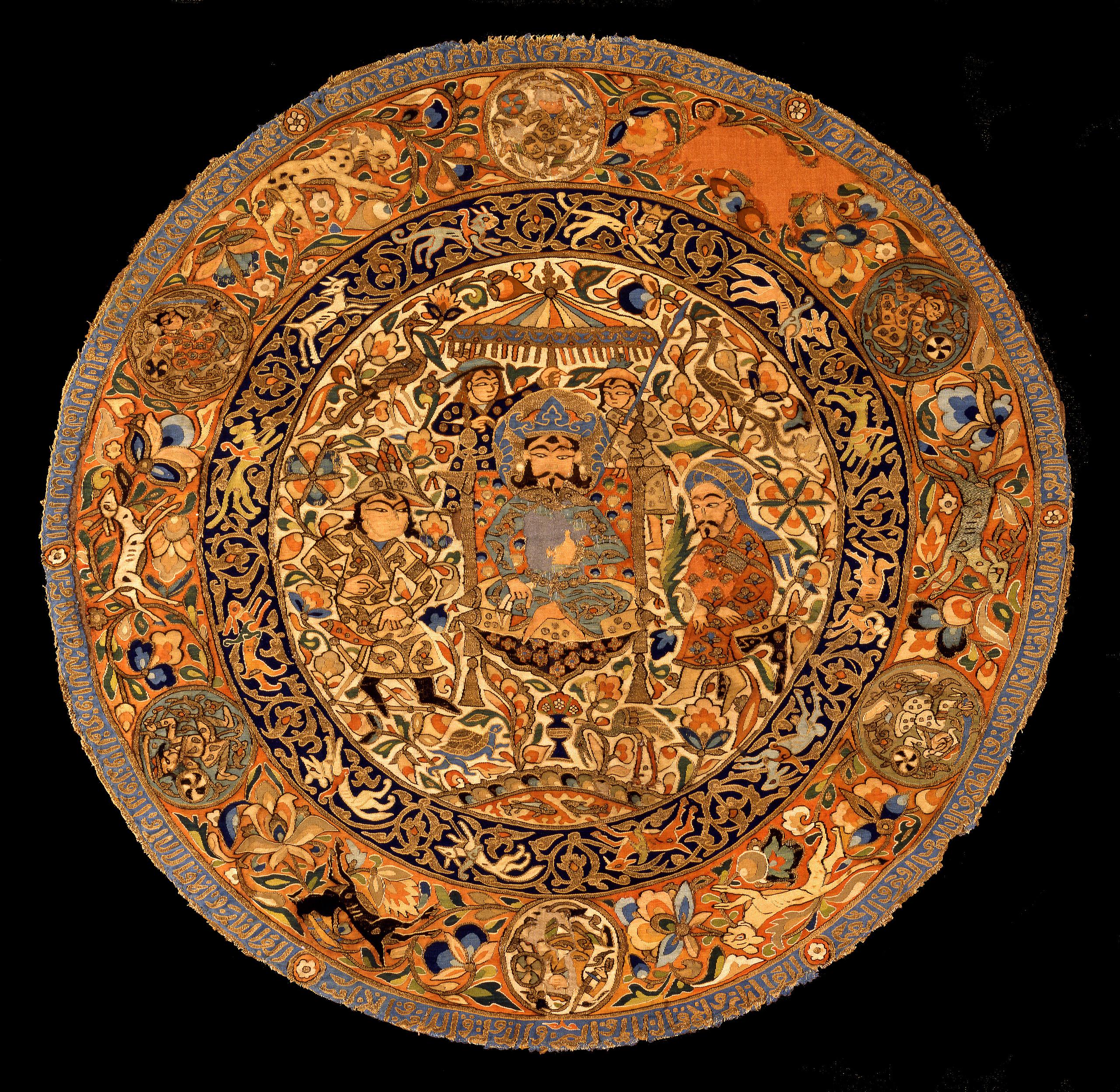
Gobelinvævet medaljon af silke og forgyldt dyremembran viklet om bomuld
Irak eller vestlige Iran; 14. århundredes 1. halvdel
Diam: 69 cm
Inventarnummer 30/1995
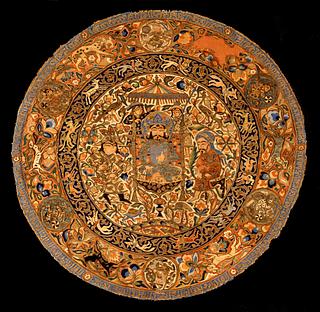
Dette tekstil er enestående ud fra enhver henseende. Det er gobelinvævet, en teknik som på denne tid ellers primært anvendtes i det mongolske Kina, hvor den benævntes kesi. At guldtråden er animalsk og viklet omkring bomuld peger dog i retning af et vestligt vævecentrum. Det gør ikonografien også.
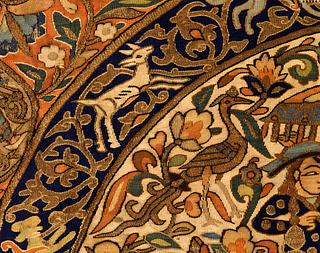
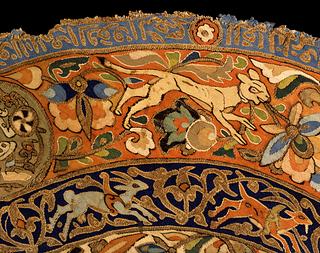
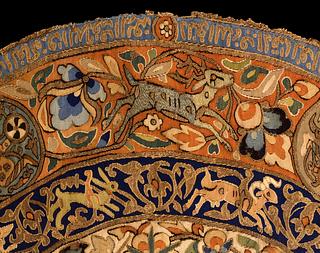
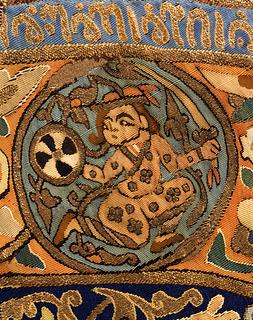
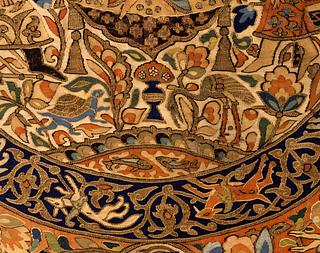
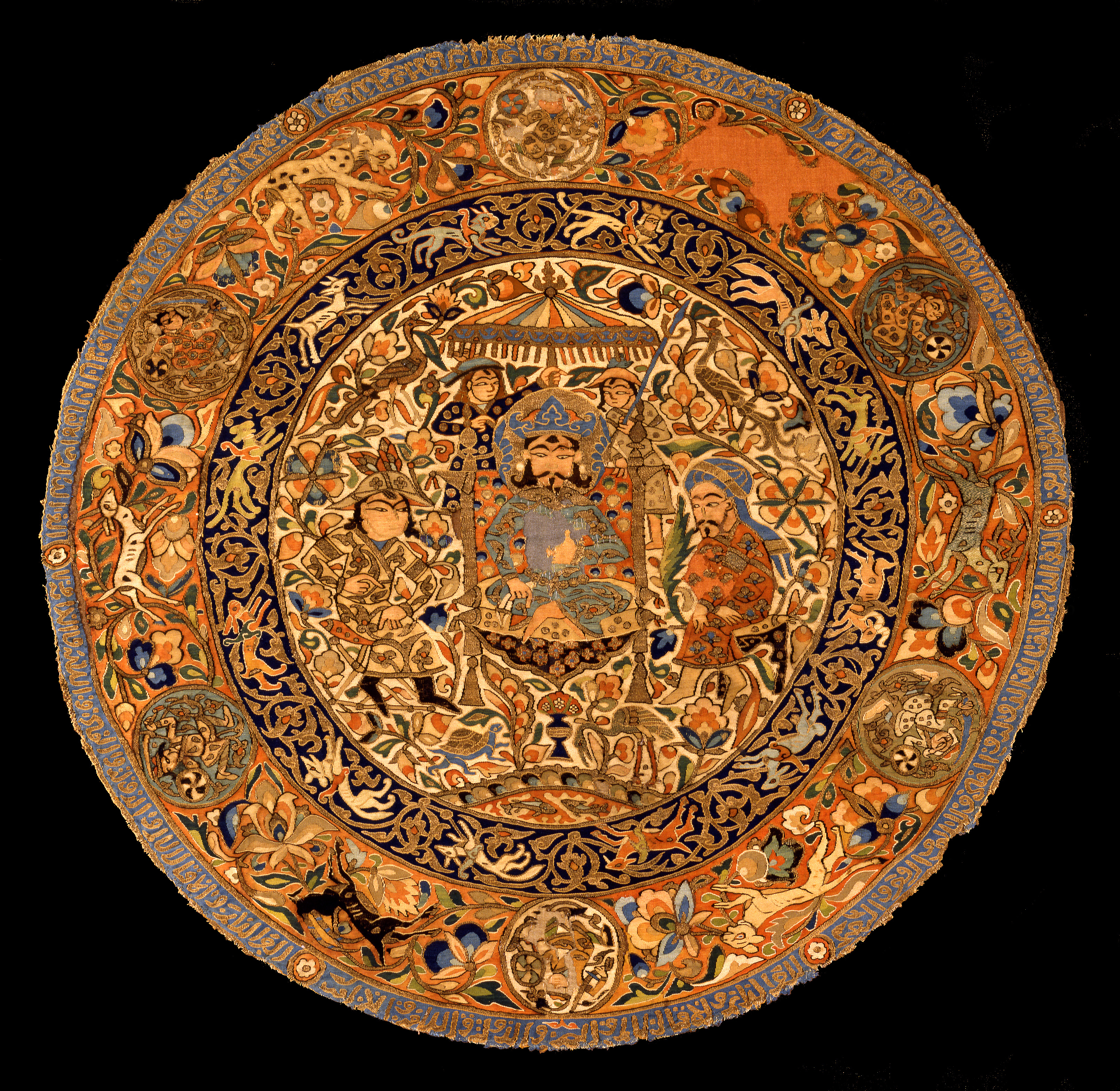
Centralt ses en tronende fyrste flankeret af en mongolsk prins eller general, samt en arabisk eller persisk vesir. Disse er atter omgivet af lotusblomster m.m., dyrefriser, som de kendes fra islamiske metalgenstande, mongolske krigere i rondeller, samt en læselig arabisk indskrift.
Tekstilet er sandsynligvis vævet af eller under opsyn af kinesiske vævere i det il-khanidiske Iran eller Irak.
Centralt ses en tronende fyrste flankeret af en mongolsk prins eller general, samt en arabisk eller persisk vesir. Disse er atter omgivet af lotusblomster m.m., dyrefriser, som de kendes fra islamiske metalgenstande, mongolske krigere i rondeller, samt en læselig arabisk indskrift.
Tekstilet er sandsynligvis vævet af eller under opsyn af kinesiske vævere i det il-khanidiske Iran eller Irak.
Publiceret i
Publiceret i
Kjeld von Folsach, Torben Lundbæk og Peder Mortensen (red.): Sultan, shah og stormogul: den islamiske verdens historie og kultur, Nationalmuseet, København 1996, kat.nr. 133;
Kjeld von Folsach: “Pax Mongolica : an Ilkhanid tapestry-woven roundel” i Hali, 85, March–April 1996, s. 80–87, 117 : ill.;
Robert Hillenbrand: Islamic art and architecture, London 1999, fig. 159, s. 203;
Kjeld von Folsach: Kunst fra islams verden i Davids Samling, København 2001, kat.nr. 642;
Linda Komaroff og Stefano Carboni (red.): The legacy of Genghis Khan: courtly art and culture in Western Asia, 1256-1353, Metropolitan Museum of Art, New York 2002, fig. 195, s. 168, kat.nr. 72, s. 260-261;
Jutta Frings (red.): Dschingis Khan und seine Erben: das Weltreich der Mongolen, Kunst- und Ausstellungshalle der Bundesrepublik Deutschland, Bonn 2005, kat.nr. 329, s. 287-288;
Sheila S. Blair og Jonathan M. Bloom (red.): Cosmophilia. Islamic Art from the David Collection, Copenhagen, McMullen Museum of Art, Boston College, Boston 2006, kat.nr. 3;
Kjeld von Folsach: For de Udvalgte Få: Islamisk Miniaturemaleri fra Davids Samling, Louisiana, Humlebæk 2007, s. 23, fig. 2;
Tanya Treptow og Donald Whitcomb: Daily life ornamented: the medieval Persian city of Rayy, Oriental Institute Museum of the University of Chicago, Chicago 2007, s. 21;
Yuka Kadoi: Islamic chinoiserie: the art of Mongol Iran, Edinburgh 2009, fig. 1.13, s. 30-31;
Oliver Watson: “The case of the Ottoman table” i Journal of the David Collection, 2010, 3, fig. 28, s. 41;
Lorenz Korn: “A tubular bronze object from Khurasan” i Venetia Porter og Mariam Rosser-Owens (red ): Metalwork and material culture in the Islamic world : art, craft and text : essays presented to James W. Allan, London 2012, note 13, s. 153 (ingen foto);
Kjeld von Folsach: “A set of silk panels from the Mongol period” i Sheila Blair og Jonathan Bloom (red.): God is beautiful and loves beauty: the object in Islamic art and culture, New Haven 2013, s. 216,og s. 231, fig. 220;
Institute of Ismaili Studies: Encounters in Muslim History, Student reader 1, London 2013, (reprint. 2017), s. 210;
Louise W. Mackie: Symbols of power: luxury textiles from Islamic lands, 7th–21st century, Cleveland 2015, fig. 6.15, s. 230-31;
Anne Dunlop: “Ornament and vice: the foreign, the mobile, and the Cocharelli fragments” i Gülru Necipoglu og Alina Paynes (red.): Histories of ornament: from global to local, Princeton 2016, fig. 18.6, s. 234;
Kjeld von Folsach, Joachim Meyer: Menneskefiguren i islamisk kunstfolk, fyrster og hellige mænd, Davids Samling, København 2017, fig. 21, s. 66;
Susan Whitfield (red.): Silk Roads: peoples, cultures, landscapes, London 2019, fig. 3, s. 17;
Eiren L. Shea: Mongol court dress, identity formation, and global exchange, Abingdon 2020, p. 135, fig. 5.6;
Robert Hillenbrand: The Great Mongol Shahnama, London 2022, fig. 7.9, s. 173;
Kjeld von Folsach: “Pax Mongolica : an Ilkhanid tapestry-woven roundel” i Hali, 85, March–April 1996, s. 80–87, 117 : ill.;
Robert Hillenbrand: Islamic art and architecture, London 1999, fig. 159, s. 203;
Kjeld von Folsach: Kunst fra islams verden i Davids Samling, København 2001, kat.nr. 642;
Linda Komaroff og Stefano Carboni (red.): The legacy of Genghis Khan: courtly art and culture in Western Asia, 1256-1353, Metropolitan Museum of Art, New York 2002, fig. 195, s. 168, kat.nr. 72, s. 260-261;
Jutta Frings (red.): Dschingis Khan und seine Erben: das Weltreich der Mongolen, Kunst- und Ausstellungshalle der Bundesrepublik Deutschland, Bonn 2005, kat.nr. 329, s. 287-288;
Sheila S. Blair og Jonathan M. Bloom (red.): Cosmophilia. Islamic Art from the David Collection, Copenhagen, McMullen Museum of Art, Boston College, Boston 2006, kat.nr. 3;
Kjeld von Folsach: For de Udvalgte Få: Islamisk Miniaturemaleri fra Davids Samling, Louisiana, Humlebæk 2007, s. 23, fig. 2;
Tanya Treptow og Donald Whitcomb: Daily life ornamented: the medieval Persian city of Rayy, Oriental Institute Museum of the University of Chicago, Chicago 2007, s. 21;
Yuka Kadoi: Islamic chinoiserie: the art of Mongol Iran, Edinburgh 2009, fig. 1.13, s. 30-31;
Oliver Watson: “The case of the Ottoman table” i Journal of the David Collection, 2010, 3, fig. 28, s. 41;
Lorenz Korn: “A tubular bronze object from Khurasan” i Venetia Porter og Mariam Rosser-Owens (red ): Metalwork and material culture in the Islamic world : art, craft and text : essays presented to James W. Allan, London 2012, note 13, s. 153 (ingen foto);
Kjeld von Folsach: “A set of silk panels from the Mongol period” i Sheila Blair og Jonathan Bloom (red.): God is beautiful and loves beauty: the object in Islamic art and culture, New Haven 2013, s. 216,og s. 231, fig. 220;
Institute of Ismaili Studies: Encounters in Muslim History, Student reader 1, London 2013, (reprint. 2017), s. 210;
Louise W. Mackie: Symbols of power: luxury textiles from Islamic lands, 7th–21st century, Cleveland 2015, fig. 6.15, s. 230-31;
Anne Dunlop: “Ornament and vice: the foreign, the mobile, and the Cocharelli fragments” i Gülru Necipoglu og Alina Paynes (red.): Histories of ornament: from global to local, Princeton 2016, fig. 18.6, s. 234;
Kjeld von Folsach, Joachim Meyer: Menneskefiguren i islamisk kunstfolk, fyrster og hellige mænd, Davids Samling, København 2017, fig. 21, s. 66;
Susan Whitfield (red.): Silk Roads: peoples, cultures, landscapes, London 2019, fig. 3, s. 17;
Eiren L. Shea: Mongol court dress, identity formation, and global exchange, Abingdon 2020, p. 135, fig. 5.6;
Robert Hillenbrand: The Great Mongol Shahnama, London 2022, fig. 7.9, s. 173;