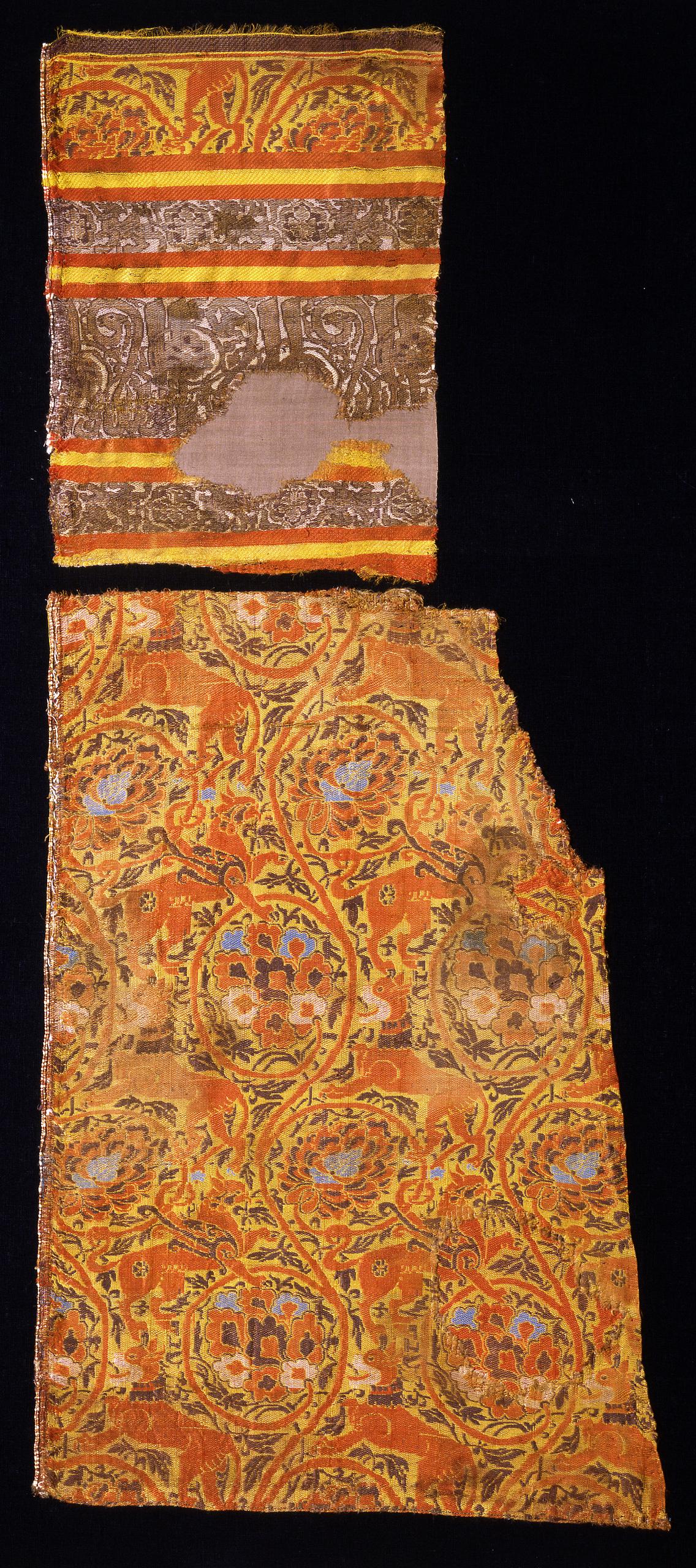
Two samitum-woven textile fragments, silk and silvered paper lamella
East Islamic world or China; 13th century
H: c. 100.5; W: 43.5 cm
Inventory number 12/2002
This piece was woven in a different way than the museum’s other lampas-woven textiles from the Mongol period and is far more colorful. With its stylized, calligraphic frieze, in which the upstrokes of the letters end in animal heads, its lively lions and griffins rooted in the Sasanian and Byzantine tradition, and its sumptuous, lotus-like imaginary flowers on wildly contorted arabesque vines, the textile combines features from the culture of both East and West.
The use of paper for the silver thread points in the direction of China, while the iconography is Western. With our present knowledge, it is impossible to localize the textile more precisely than we have.
The use of paper for the silver thread points in the direction of China, while the iconography is Western. With our present knowledge, it is impossible to localize the textile more precisely than we have.
Published in
Published in
Sheila S. Blair and Jonathan M. Bloom (eds.): Cosmophilia. Islamic Art from the David Collection, Copenhagen, McMullen Museum of Art, Boston College, Boston 2006, cat. 92;
Kjeld von Folsach: Flora islamica: plantemotiver i islamisk kunst, Davids Samling, København 2013, cat. 15;
Corinne Mühlemann: “Inscribed horizontal bands on two cloth-of-gold panels and their function as part of an Îlkhânid dress” in Ars Orientalis, 47, 2017, p. 60, fig. 18;
Corinne Mühlemann: Complex weaves: technique, text, and cultural history of striped silks, Affalterbach 2023, fig. 23, p. 57;
Kjeld von Folsach: Flora islamica: plantemotiver i islamisk kunst, Davids Samling, København 2013, cat. 15;
Corinne Mühlemann: “Inscribed horizontal bands on two cloth-of-gold panels and their function as part of an Îlkhânid dress” in Ars Orientalis, 47, 2017, p. 60, fig. 18;
Corinne Mühlemann: Complex weaves: technique, text, and cultural history of striped silks, Affalterbach 2023, fig. 23, p. 57;
Textiles, Carpets and Leather
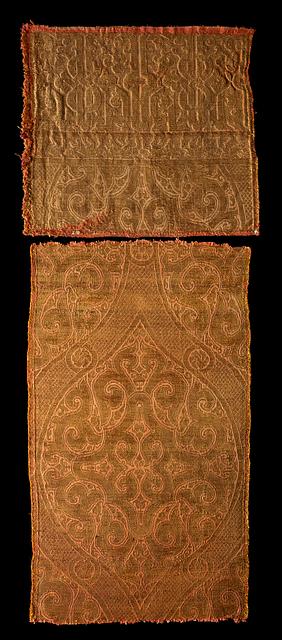
Two lampas-woven textile fragments, silk and gilded lamella of animal substrate, both spun around a silk core and woven flat
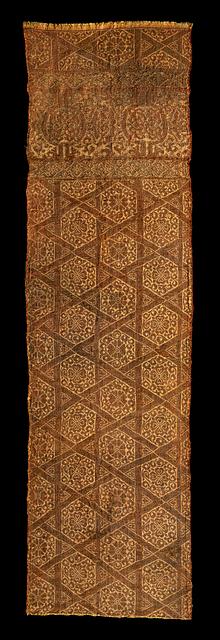
Fragment of a lampas-woven textile, silk and gilded lamella of animal substrate both spun around a silk core and woven flat
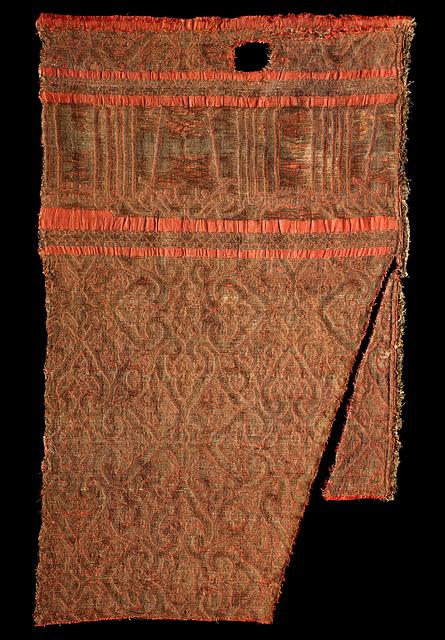
Fragment of a lampas-woven textile, silk and gilded lamella of animal substrate, both spun around a silk core and woven flat
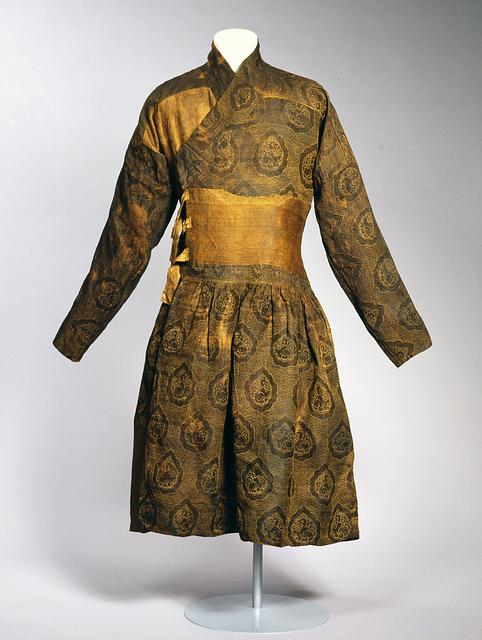
Caftan sewn from a lampas-woven textile, silk with gilded lamella of animal substrate