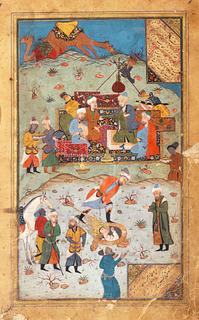
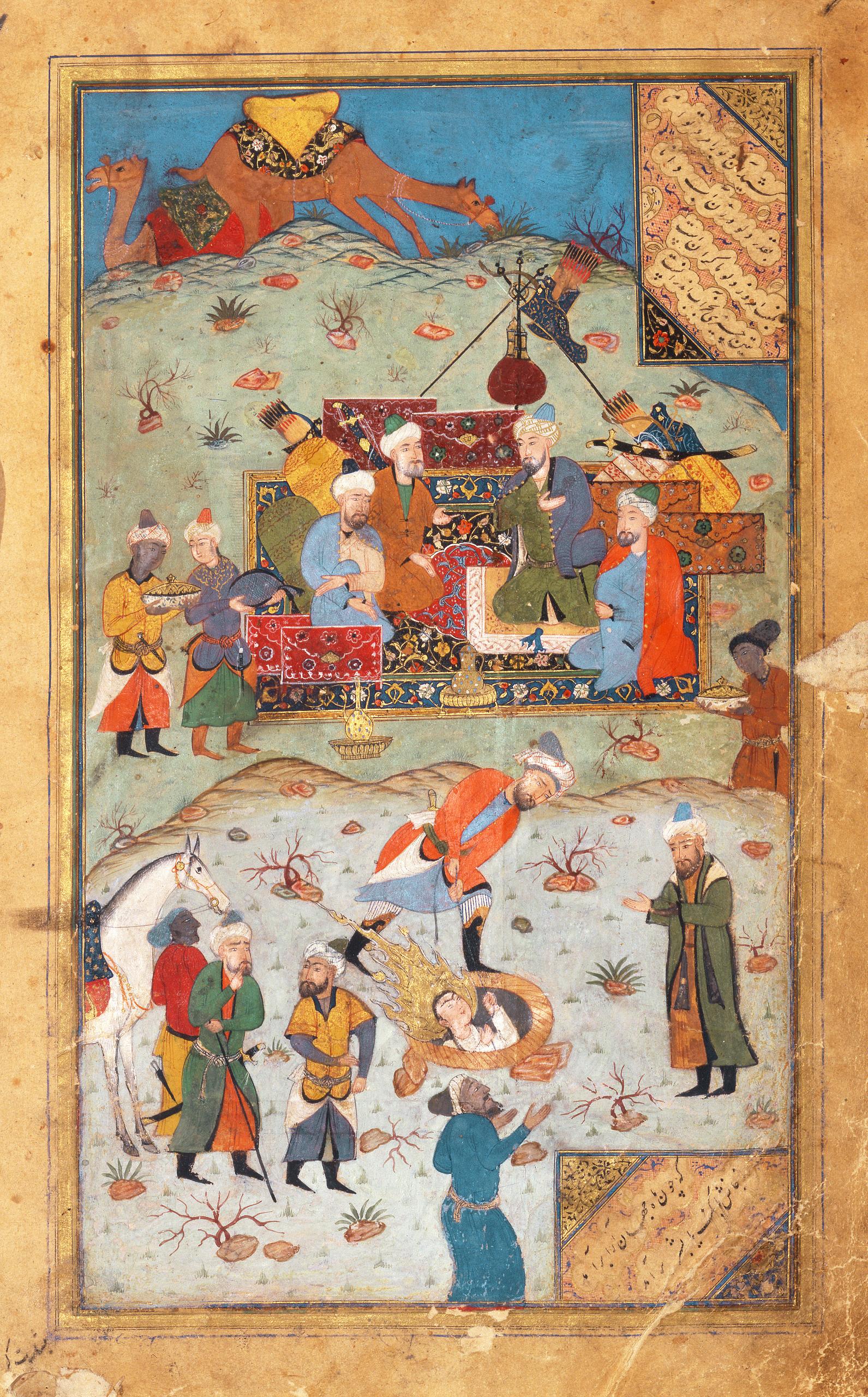
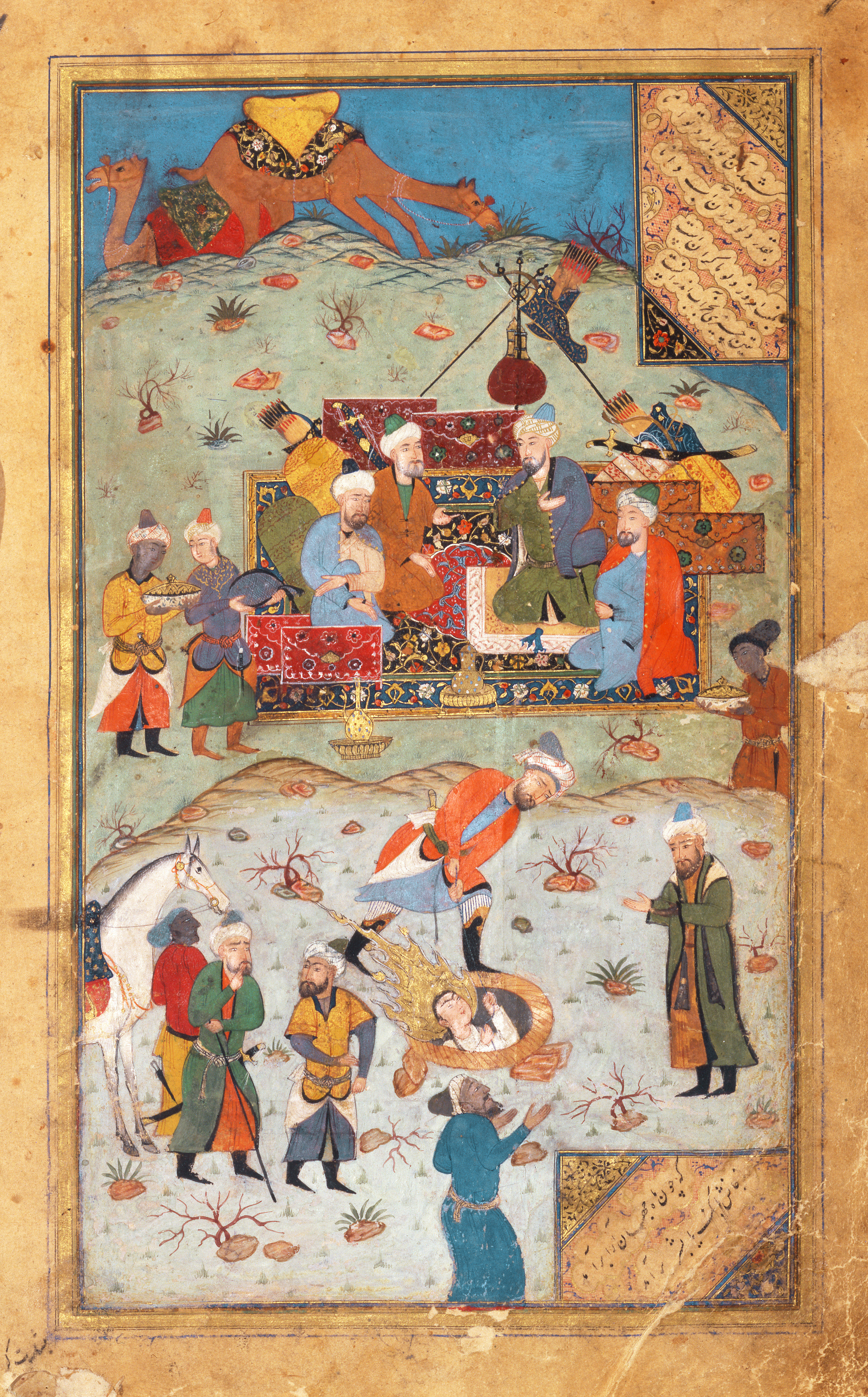
Miniature from a copy of Jami’s Yusuf wa Zulaykha. ‘Yusuf Pulled from the Well’
Central Asia, Bukhara; c. 1560
Leaf: 25 × 16 cm
Inventory number 53/1980
After the founder of the Safavid dynasty, Shah Ismael, killed Muhammad Shaybani Khan in Herat in 1501, the Shaybanids went north of the Amu Darya River and remained Sunni Muslim opponents of Shiite Iran. A local style of painting was evolved in their capital, Bukhara, that was initially influenced by the Timurid art of Herat.
Nur al-Din Abd al-Rahman Jami (1414-1492) was Iran’s third great classical author, after Firdawsi and Nizami. Like the famous painter Bihzad, he worked at the court of the last Timurid sultan, Husayn Bayqara in Herat. Jami’s most famous work is the anthology Haft awrang (The Seven Thrones), the fifth part of which is the poem “Yusuf and Zulayka.”
It is a retelling of the Old Testament’s story of Joseph, whose brothers throw him into a well, from which he is saved by merchants who sell him as a slave in Egypt. Joseph, or Yusuf, is also mentioned in the Koran, which has an entire chapter named after him and where he is considered a holy man.
Nur al-Din Abd al-Rahman Jami (1414-1492) was Iran’s third great classical author, after Firdawsi and Nizami. Like the famous painter Bihzad, he worked at the court of the last Timurid sultan, Husayn Bayqara in Herat. Jami’s most famous work is the anthology Haft awrang (The Seven Thrones), the fifth part of which is the poem “Yusuf and Zulayka.”
It is a retelling of the Old Testament’s story of Joseph, whose brothers throw him into a well, from which he is saved by merchants who sell him as a slave in Egypt. Joseph, or Yusuf, is also mentioned in the Koran, which has an entire chapter named after him and where he is considered a holy man.
Published in
Published in
Sotheby’s, London 5/2-1935, lot 5 (part of ms.);
[B. W. Robinson et al.]: Persian and Mughal art, Colnaghi, London [1976], cat.no. 29i (no photo);
Annika Richert (ed.): Islam: konst och kultur / art and culture, Statens historiska museum, Stockholm 1985, p. 169, cat.no. 48 and p. 171;
Art from the World of Islam. 8th-18th century, Louisiana, Humlebæk 1987, cat.no. 224/1;
Kjeld von Folsach: Islamic art. The David Collection, Copenhagen 1990, cat.no. 27;
Kjeld von Folsach, Torben Lundbæk and Peder Mortensen (eds.): Sultan, Shah and Great Mughal: the history and culture of the Islamic world, The National Museum, Copenhagen 1996, cat.no. 188;
Kjeld von Folsach: Art from the World of Islam in The David Collection, Copenhagen 2001, cat.no. 38;
Kjeld von Folsach: For the Privileged Few: Islamic Miniature Painting from The David Collection, Louisiana, Humlebæk 2007, cat.no. 51;
Ivan Z. Sørensen: Albondocani: Blixen og islam. Med Karen Blixens Kongesønnerne, København 2022, fig, 26;
[B. W. Robinson et al.]: Persian and Mughal art, Colnaghi, London [1976], cat.no. 29i (no photo);
Annika Richert (ed.): Islam: konst och kultur / art and culture, Statens historiska museum, Stockholm 1985, p. 169, cat.no. 48 and p. 171;
Art from the World of Islam. 8th-18th century, Louisiana, Humlebæk 1987, cat.no. 224/1;
Kjeld von Folsach: Islamic art. The David Collection, Copenhagen 1990, cat.no. 27;
Kjeld von Folsach, Torben Lundbæk and Peder Mortensen (eds.): Sultan, Shah and Great Mughal: the history and culture of the Islamic world, The National Museum, Copenhagen 1996, cat.no. 188;
Kjeld von Folsach: Art from the World of Islam in The David Collection, Copenhagen 2001, cat.no. 38;
Kjeld von Folsach: For the Privileged Few: Islamic Miniature Painting from The David Collection, Louisiana, Humlebæk 2007, cat.no. 51;
Ivan Z. Sørensen: Albondocani: Blixen og islam. Med Karen Blixens Kongesønnerne, København 2022, fig, 26;
Miniature Paintings
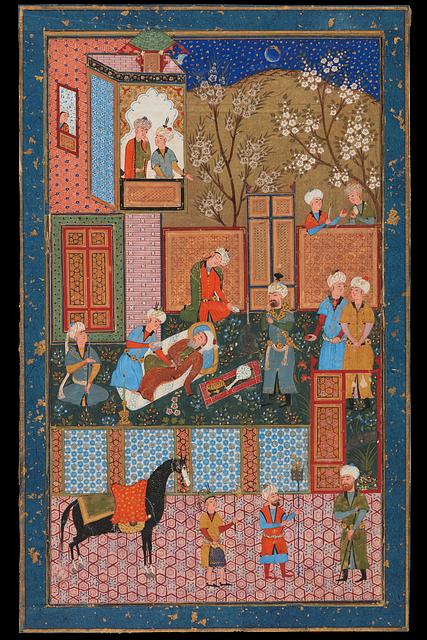
Miniature from a copy of Sadi’s Gulistan, pasted on cardboard. ‘The Sultan Wakes the Drunk Judge at Sunrise’.
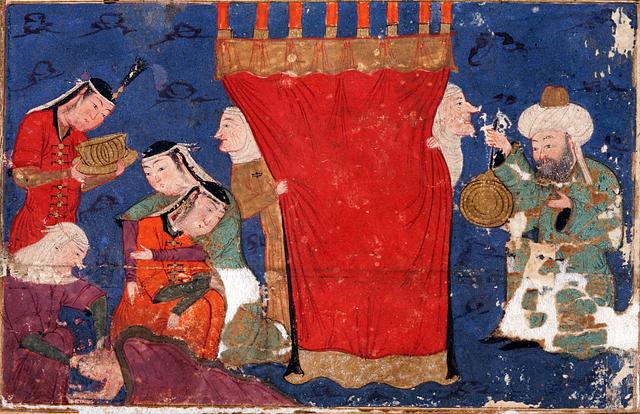
‘The Birth of Alexander the Great’. Miniature in a copy of Nizami’s Iskandarnama (Book of Alexander the Great)
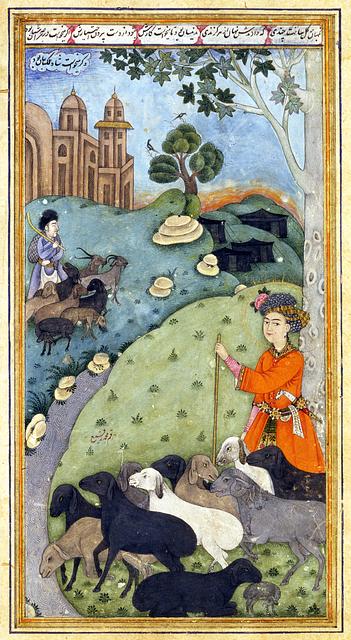
Miniature from a copy of Jami’s Yusuf wa Zulaykha
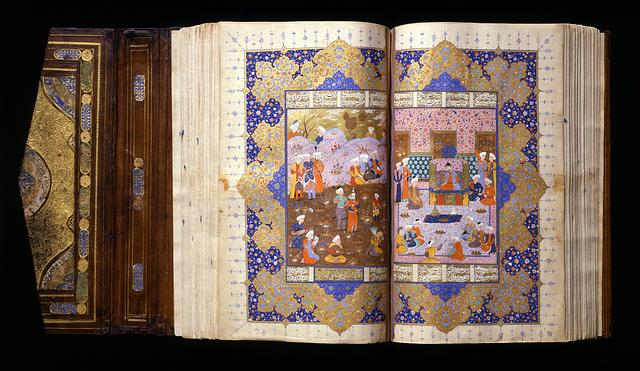
A copy of Firdawsi’s Shahnama. These miniatures (fol. 243r and fol. 242v): ‘Shah Luhrasp’s Ascension to the Throne’