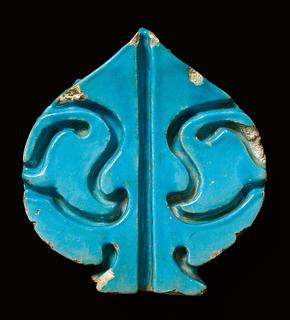
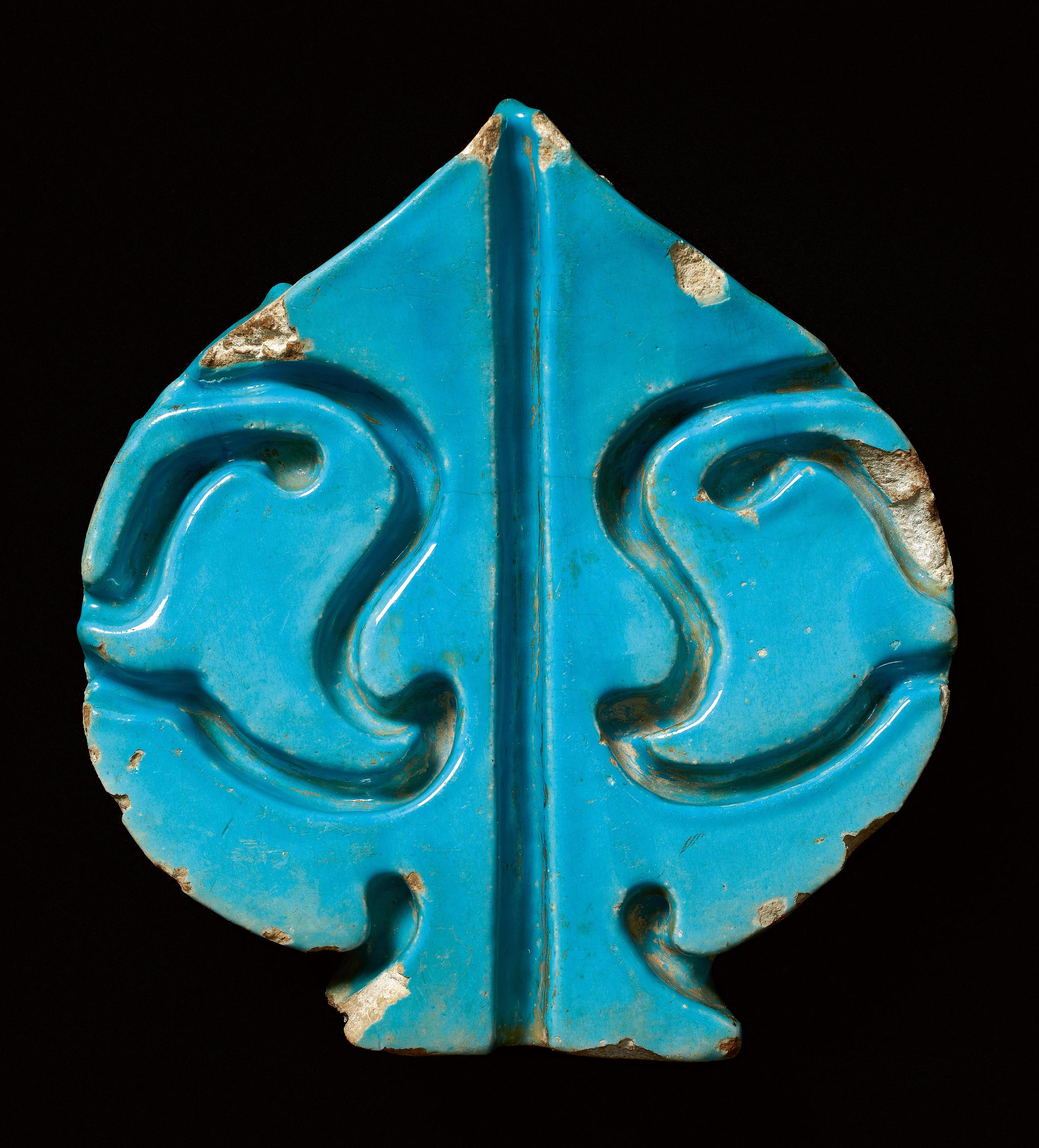
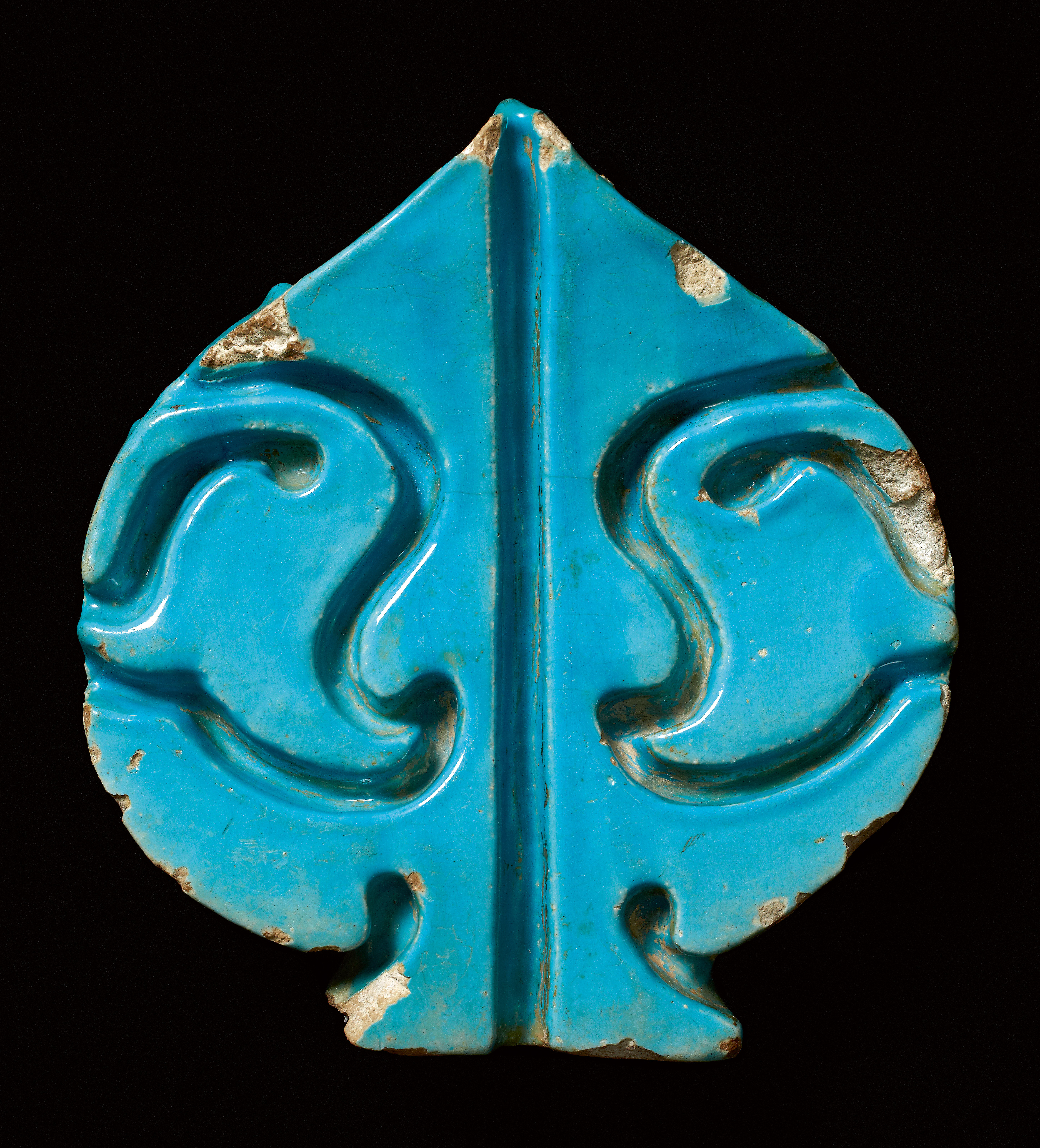
Turquoise-glazed ceramic tile
Iran; 12th-13th century
H: 24.5; W: 23.0; D: 5.7 cm
Inventory number 11/2012
It is uncertain how this thick tile was used. It may have been the decorative finial to a ceramic structure, for example a cenotaph or large wall decoration, and as such could be seen as an unconventional palmette. It could also have been part of a calligraphic decoration, in which the two central vertical elements could be viewed as the top of a combination of letters, for example lam alif. Turquoise-glazed inscriptions inlaid in unglazed brick structures are known from Persian architecture in the 12th-13th century.
No matter how we understand the tile, it makes an exceedingly distinctive impression and is a good example of how Muslim artists created new forms by stylizing plants and by combining the resulting abstractions with other motifs.
No matter how we understand the tile, it makes an exceedingly distinctive impression and is a good example of how Muslim artists created new forms by stylizing plants and by combining the resulting abstractions with other motifs.
Published in
Published in
Christie’s, London, 26/4-2012, lot 98;
Kjeld von Folsach: Flora islamica: plantemotiver i islamisk kunst, Davids Samling, København 2013, cat.no. 24;
Kjeld von Folsach: Flora islamica: plantemotiver i islamisk kunst, Davids Samling, København 2013, cat.no. 24;
Ceramics
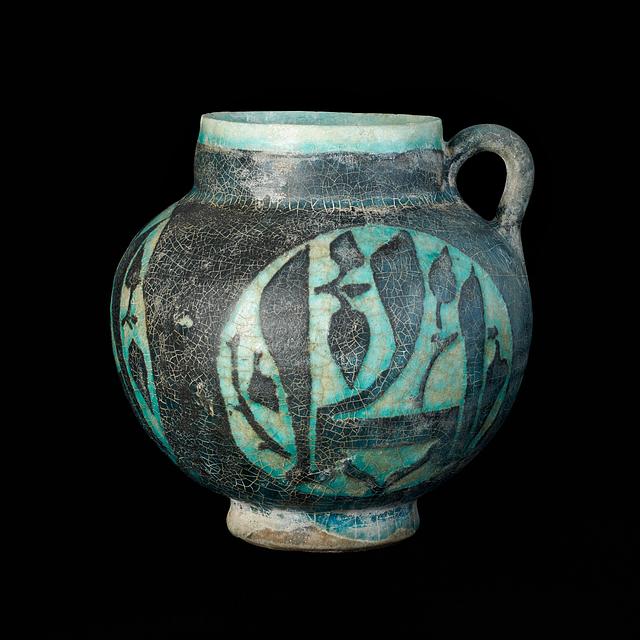
Fritware jug, with decoration cut through a black slip under a transparent, turquoise glaze
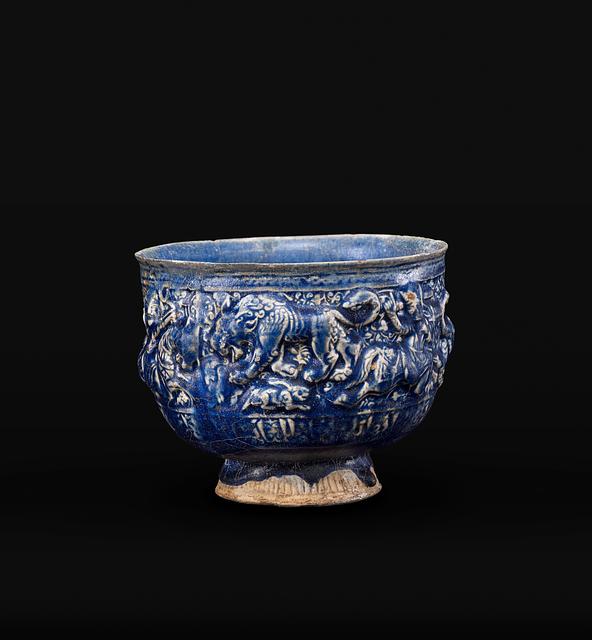
Fritware bowl, moulded and covered with a blue glaze
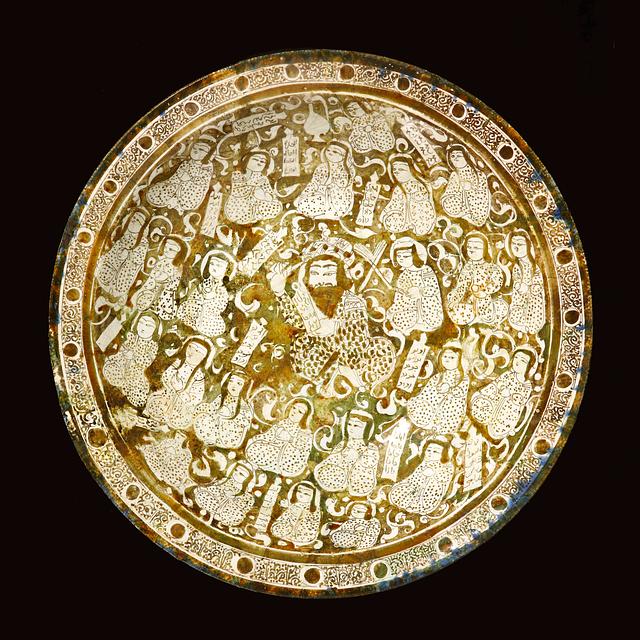
Fritware dish, painted in lustre over an opaque, white glaze
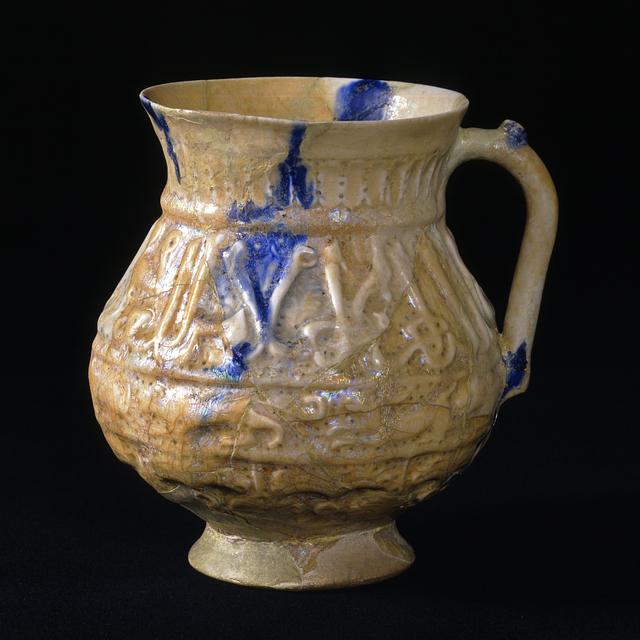
Fritware jug, with molded and openwork decoration and with splashes of blue under a transparent glaze