Chinoiserie
More materials
A fascination of the Far East
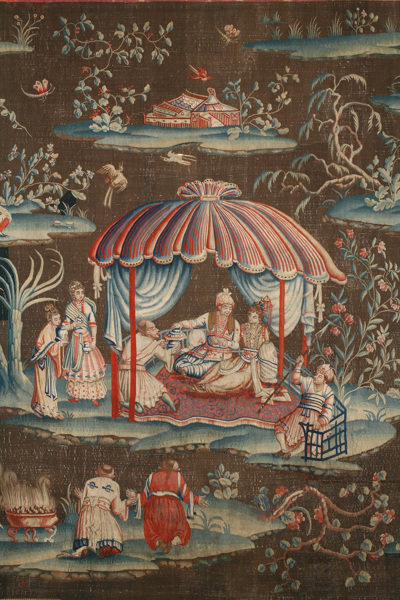
From the middle of the 17th century, tea drinking had become fashionable in the West, and the various countries’ Asiatic companies competed for the profitable tea trade with China. Their large merchant ships also carried other Far Eastern products, such as porcelain, lacquerware, and furniture.
Soon Europe became fascinated with “chinoiserie” – a wide range of items with Chinese or pseudo-Chinese motifs. Due to the high price of imported wares and delivery problems, European imitations of these exotic pieces soon followed. European merchants in China also commissioned porcelain and furniture whose forms and motifs were suited to the European taste.
Explore the category
- Artwork
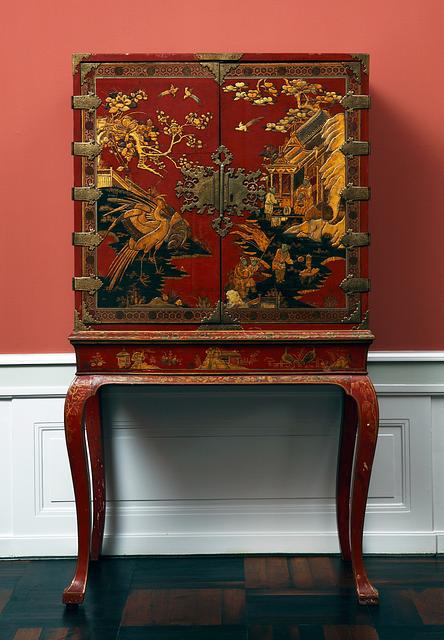
Cabinet decorated with red and gold lacquer
England, c. 1710
England, c. 1710
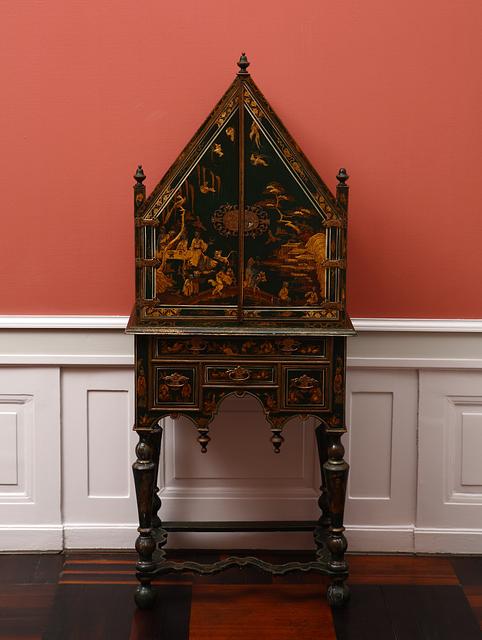
Cabinet; green-lacquered wood with gilding and inlays
India, c. 1590-1610, and England, c. 1690
India, c. 1590-1610, and England, c. 1690
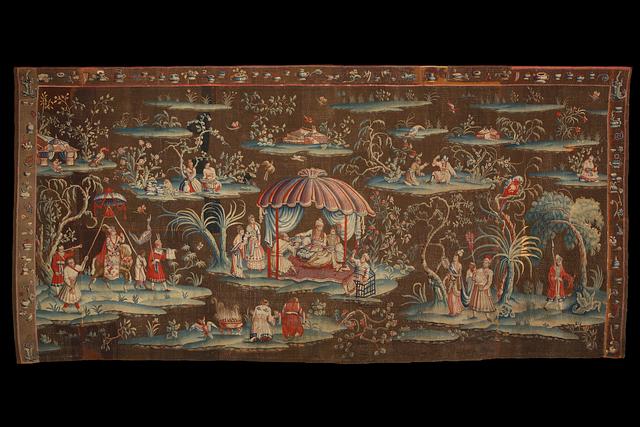
Woven tapestry; wool and silk
England, London (Soho); c. 1730
England, London (Soho); c. 1730
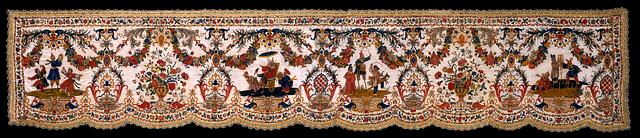
Fragment of an embroidered canopy
France, 1730
France, 1730
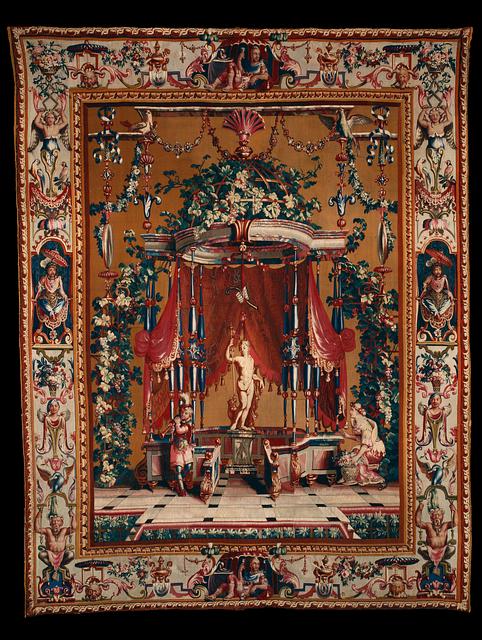
Woven tapestry; wool and silk
France, Beauvais; between 1689 and c. 1730
France, Beauvais; between 1689 and c. 1730
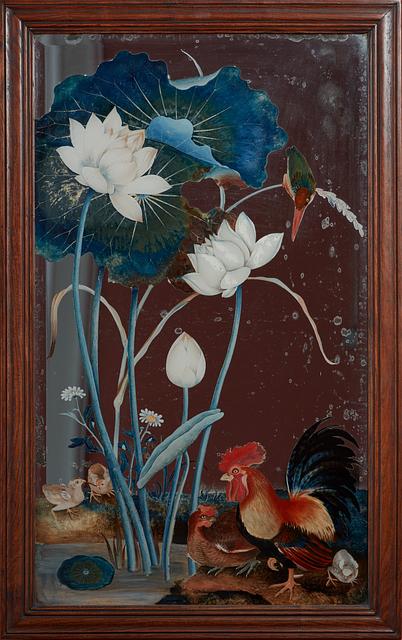
Two reverse glass painted mirrors in rosewood frames
China, c. 1740
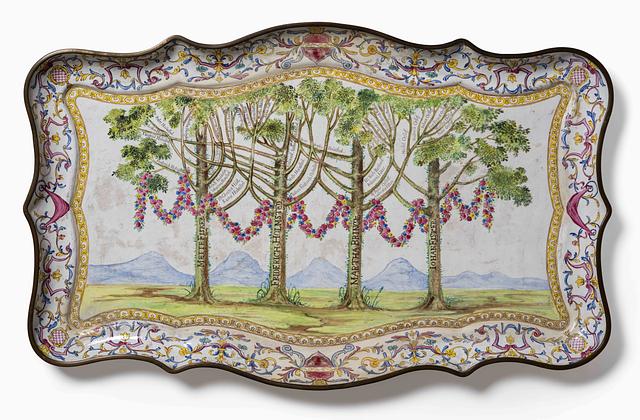
Tray of enamel on copper, The Holmsted Family Tree
China, Canton, c. 1740
China, Canton, c. 1740
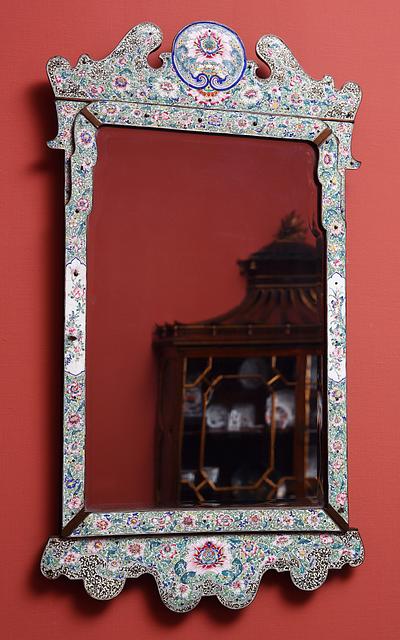
Mirror of enamel on copper
China, 1741
China, 1741
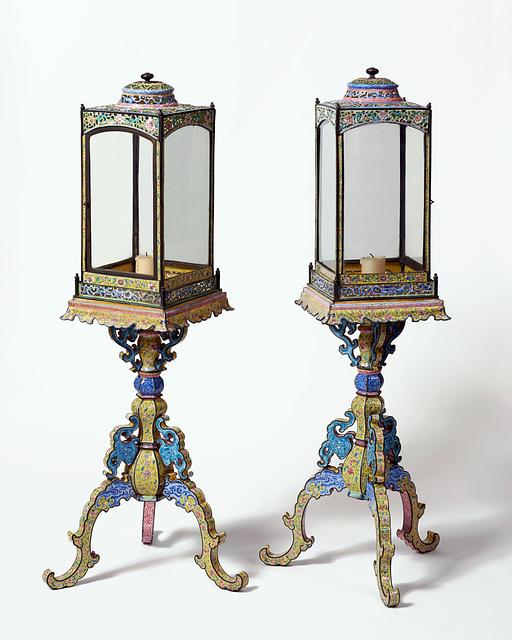
A pair of lanterns; enamel on copper
China, Canton, c, 1750
China, Canton, c, 1750
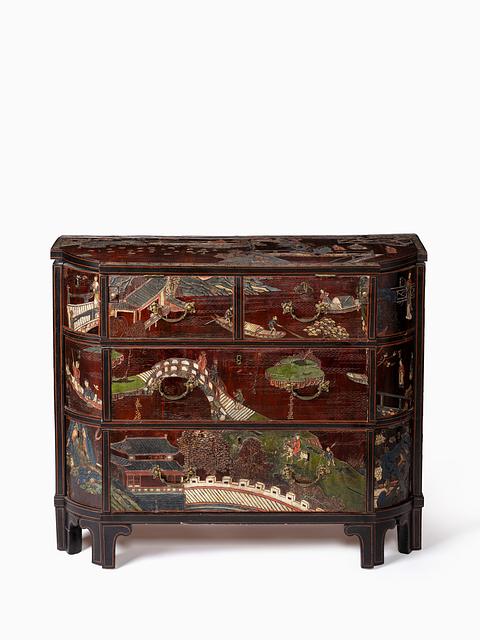
A pair of commodes veneered with Chinese coromandel lacquer
England, c. 1730-1740
England, c. 1730-1740
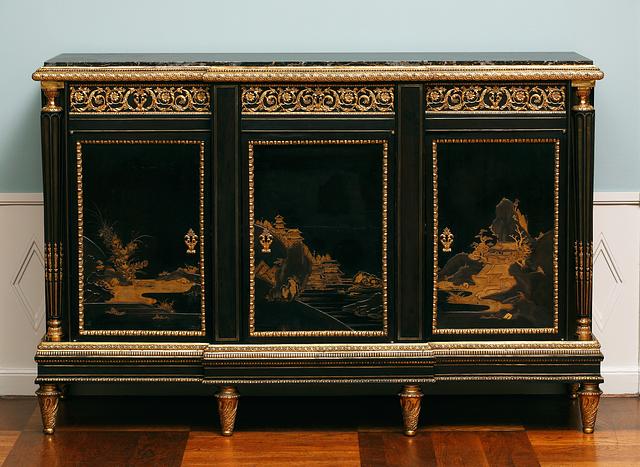
Commode; veneered with ebony and Japanese lacquer, with gilt bronze and a marble top
A. Weisweiler, Paris, c. 1780
A. Weisweiler, Paris, c. 1780
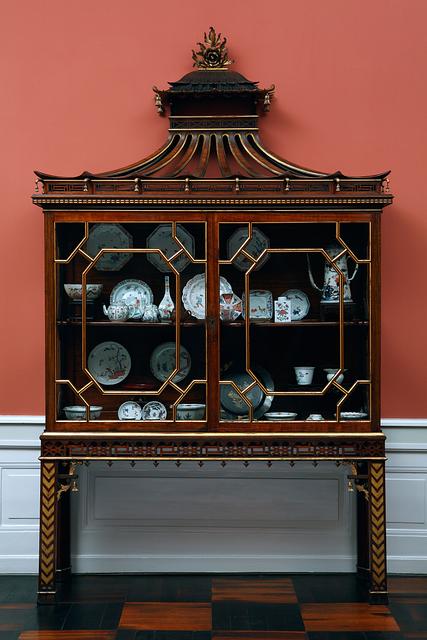
Porcelain cabinet; padouk
Thomas Chippendale, England, c. 1750
Thomas Chippendale, England, c. 1750
Explore other categories