Axel Salto (1889–1961)
Vase, c. 1945
Stoneware, Royal Copenhagen Porcelain Manufactory
H: 34 cm
Inventory number MK 60
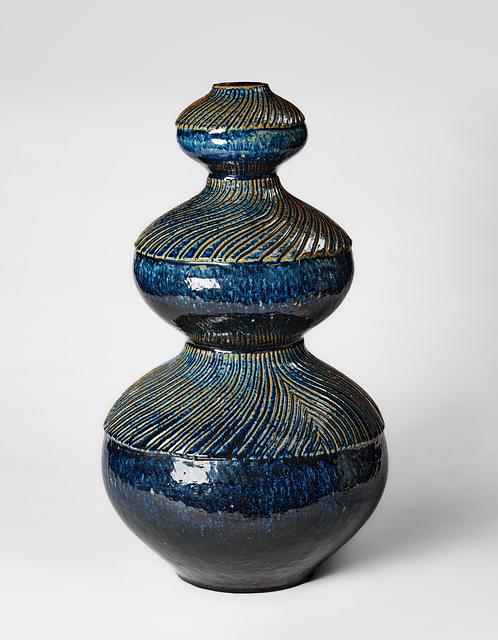
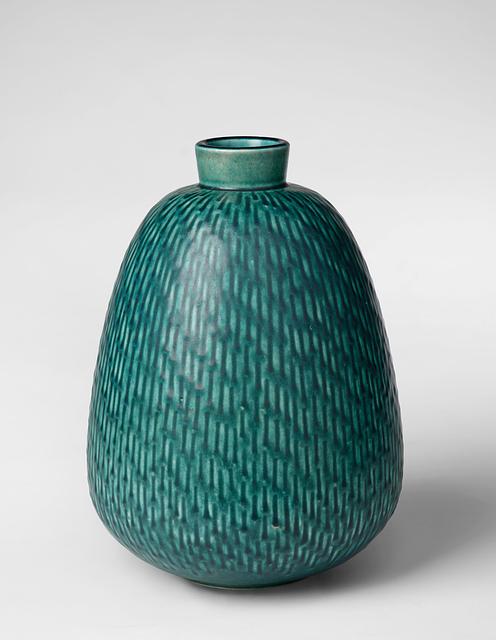
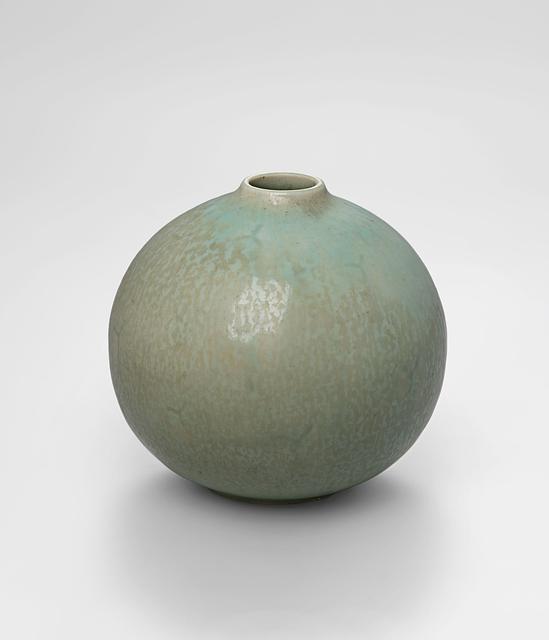
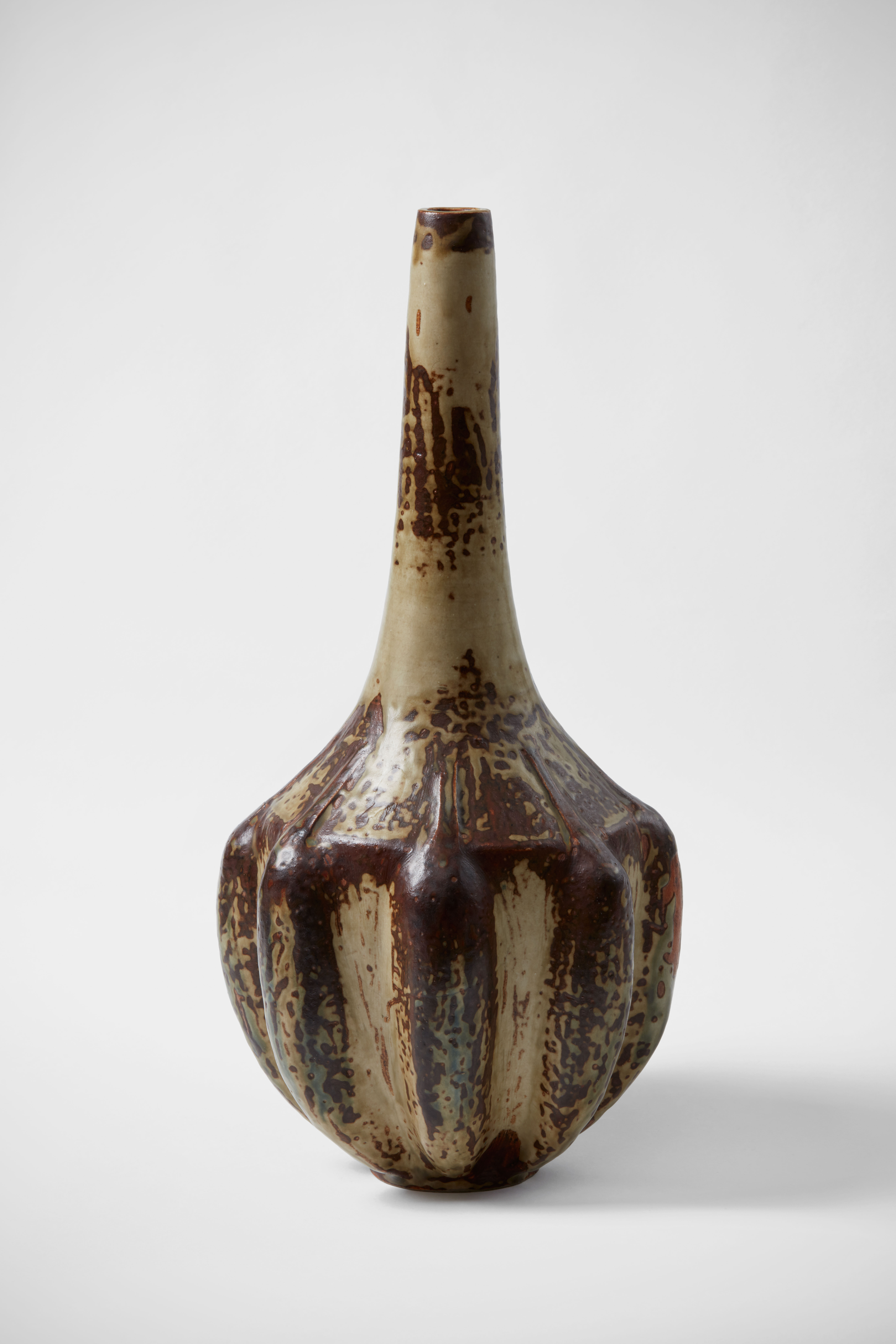
As is evident throughout his ceramic oeuvre, Axel Salto was fascinated by the unpredictability and random effects associated with glazes, traits which did not reveal themselves until after the firing. By decorating the surfaces of his vases, bowls and vessels with flutings, buds and sprouts, he sought to highlight the materiality of the glaze and let it influence the overall expression of an object – to great success. Salto’s expressive forms and fiercely inventive modelling were not the only aspects that made him a deeply original potter. So too did his use of dramatic and unruly glazes.
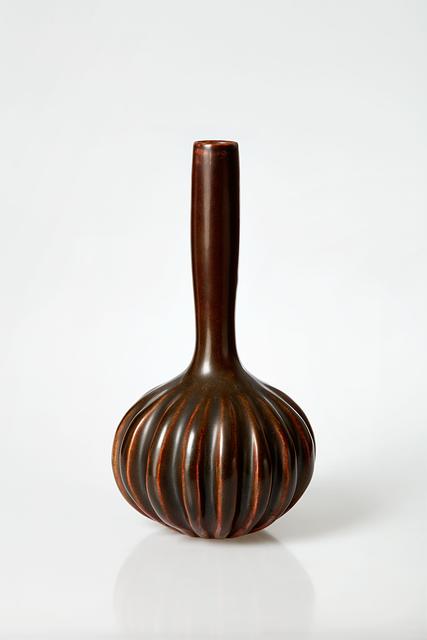
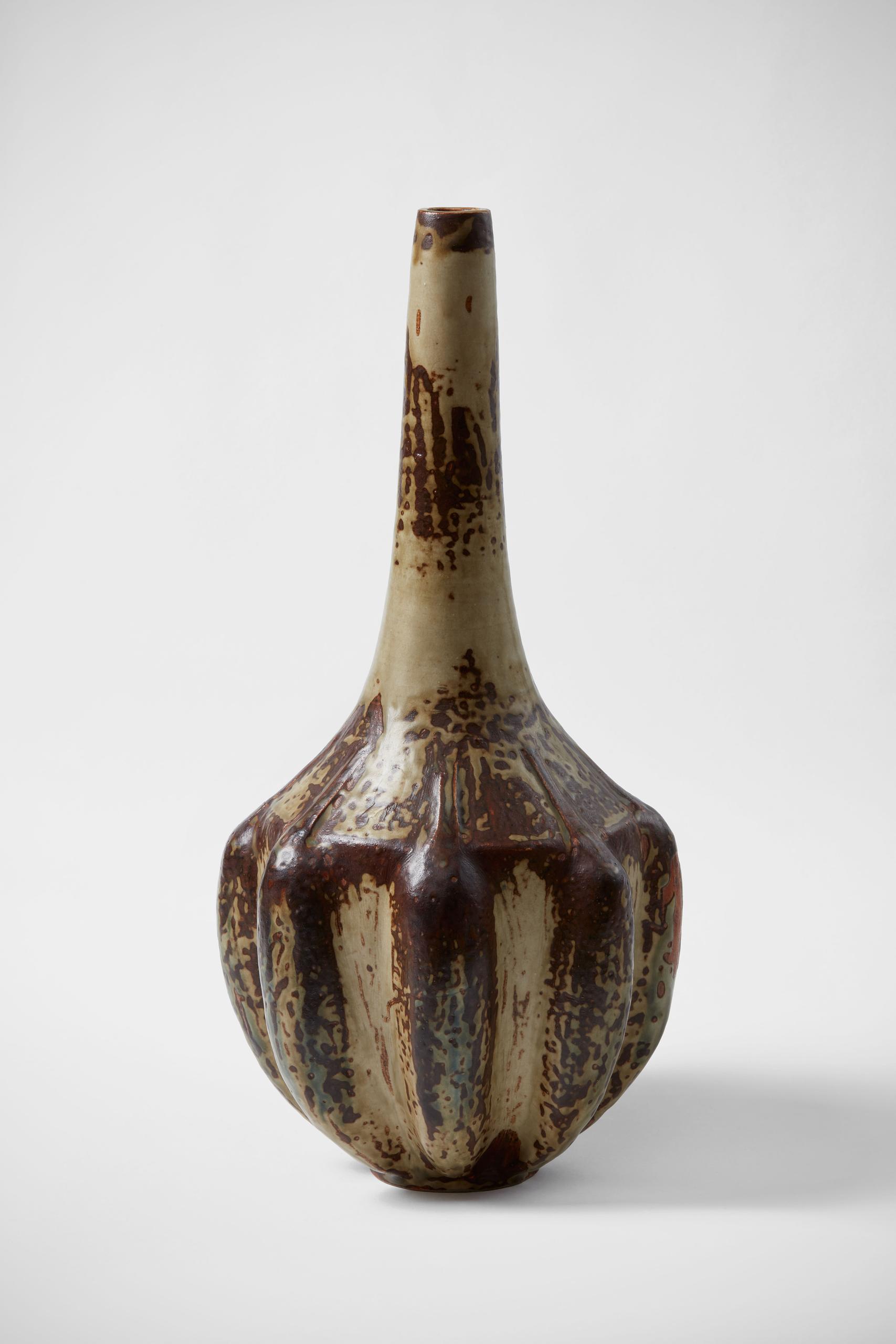
This vase with its tall, slender neck and round body with eight prominent vertical flutings is coated in the Sung glaze, one of the best known and most frequently used glazes from the Royal Copenhagen Porcelain Manufactory. It was also among the glazes that Salto often applied to his stoneware in the ‘fluted’ and ‘budding’ styles, partly because it created a rich and varied play of colour and was very well suited to highlighting the shape of the object.1 Undoubtedly, Salto was also pleased with the fact that the Sung glaze is difficult to control and never created a repeatable, uniform look from one object to the next.
The Sung glaze was also popular with other artists affiliated with the Royal Copenhagen Porcelain Manufactory, for example – and especially – the artist Knud Kyhn (MK 93), who, like Salto, was skilled at making good use of the distinctive materiality of the Sung glaze.
This vase with its tall, slender neck and round body with eight prominent vertical flutings is coated in the Sung glaze, one of the best known and most frequently used glazes from the Royal Copenhagen Porcelain Manufactory. It was also among the glazes that Salto often applied to his stoneware in the ‘fluted’ and ‘budding’ styles, partly because it created a rich and varied play of colour and was very well suited to highlighting the shape of the object.1 Undoubtedly, Salto was also pleased with the fact that the Sung glaze is difficult to control and never created a repeatable, uniform look from one object to the next.
The Sung glaze was also popular with other artists affiliated with the Royal Copenhagen Porcelain Manufactory, for example – and especially – the artist Knud Kyhn (MK 93), who, like Salto, was skilled at making good use of the distinctive materiality of the Sung glaze.
Published in
Published in
Susanne Bruhn and Pia Wirnfeldt (eds.): Axel Salto - stentøjsmesteren, CLAY Keramikmuseum, Middelfart 2017, model catalog no. 360, p. 180;
Footnotes
Footnotes
1.
Regarding the history and development of the Sung glaze, see Leif Lautrup Larsen: Stentøj – Den kongelige Porcelainsfabrik, Copenhagen 2007, pp. 362–365.
Ceramics