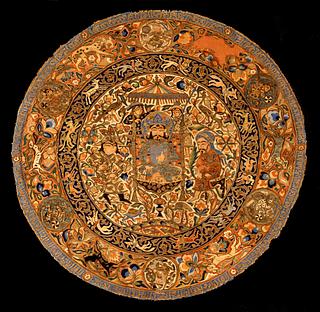
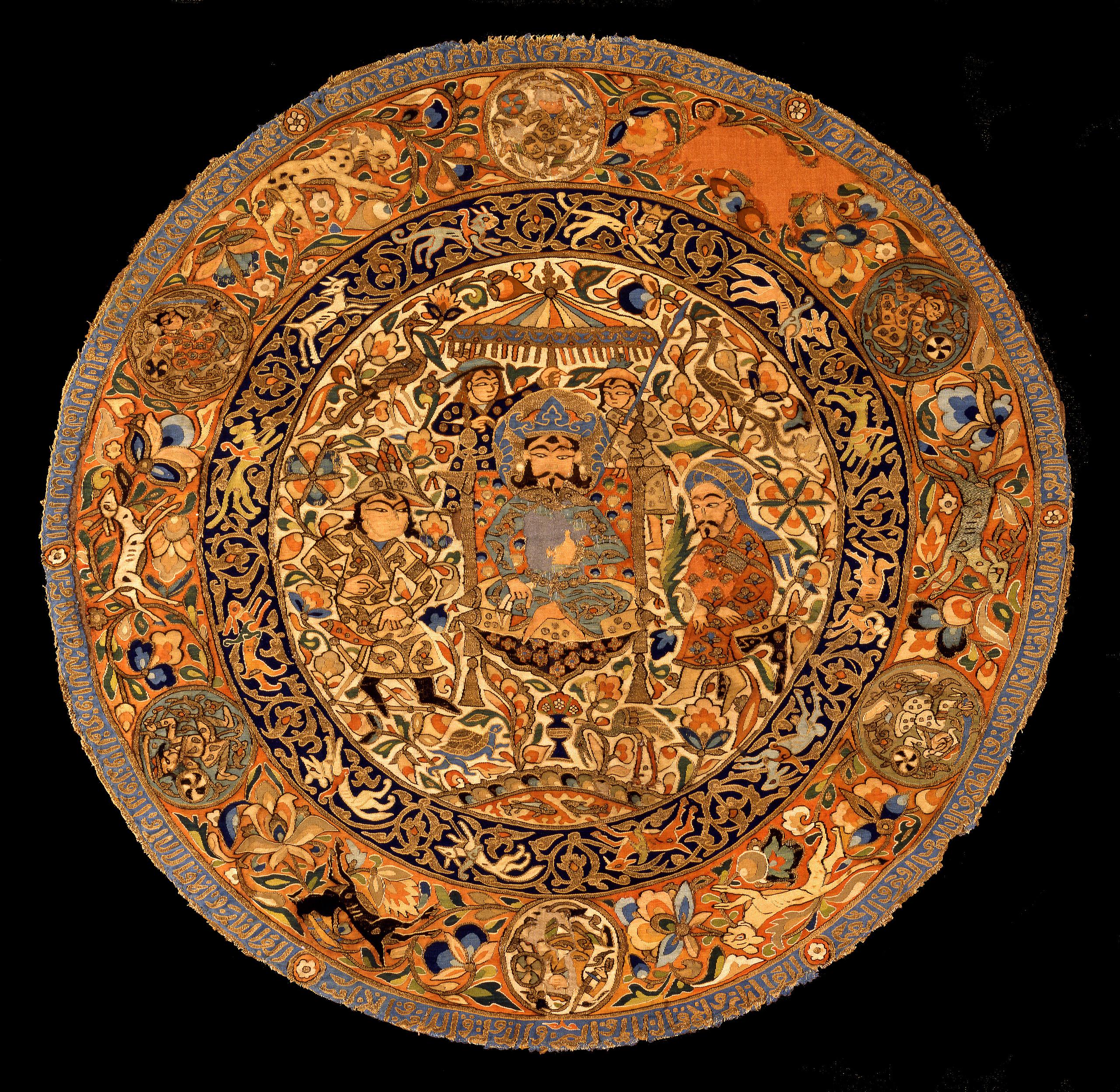
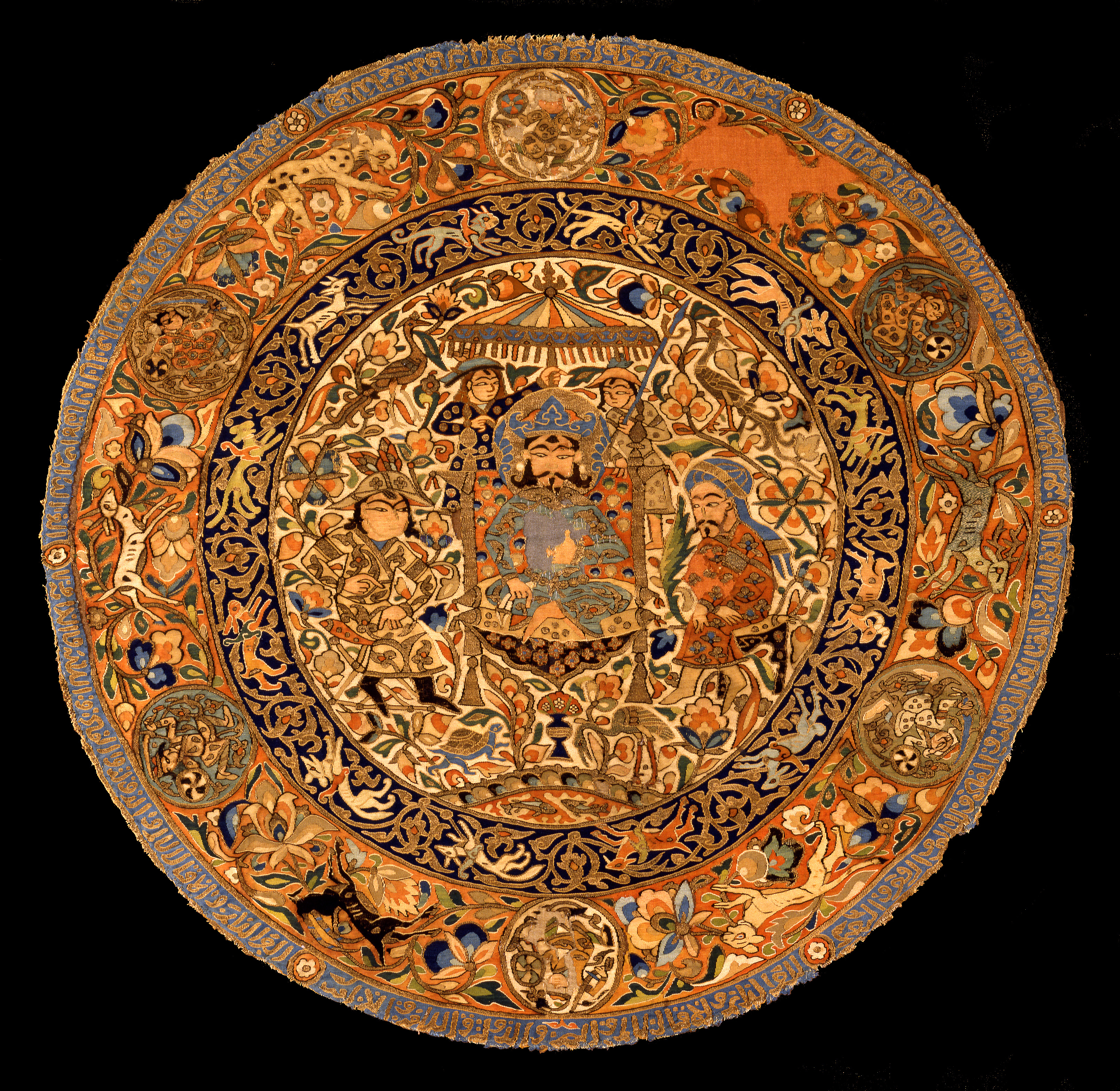
Medallion, tapestry, silk and gilded lamella of animal substrate spun around cotton
Iraq or western Iran; 1st half of 14th century
Diam: 69 cm
Inventory number 30/1995
This textile is unique in every respect. It is a tapestry, a technique that in the period was otherwise used primarily in Mongol China, where it was called kesi. The fact that the “gold thread” is animal in origin and spun around cotton, however, points in the direction of a western weaving center. So does the iconography.
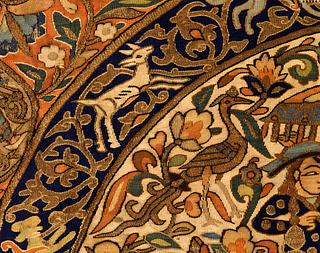
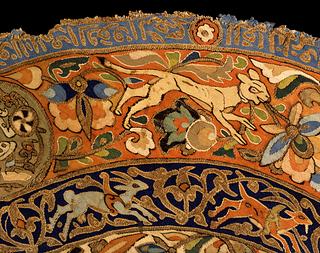
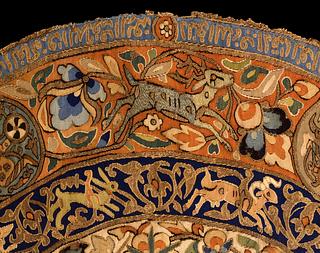
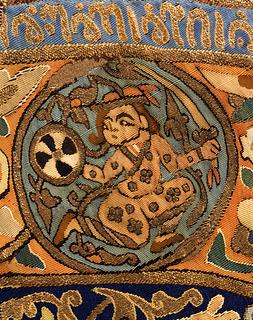
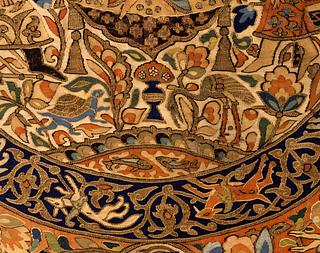
In the center is an enthroned prince flanked by a Mongol prince or general and an Arab or Persian vizier. These figures, in turn, are surrounded by lotuses, etc., animal friezes of the type known from Islamic metalwork, Mongol warriors in roundels, and a readable Arabic inscription.
The textile was probably made by or under the supervision of Chinese weavers in il-Khanid Iran or Iraq.
In the center is an enthroned prince flanked by a Mongol prince or general and an Arab or Persian vizier. These figures, in turn, are surrounded by lotuses, etc., animal friezes of the type known from Islamic metalwork, Mongol warriors in roundels, and a readable Arabic inscription.
The textile was probably made by or under the supervision of Chinese weavers in il-Khanid Iran or Iraq.
Published in
Published in
Kjeld von Folsach, Torben Lundbæk and Peder Mortensen (eds.): Sultan, Shah and Great Mughal: the history and culture of the Islamic world, The National Museum, Copenhagen 1996, cat.no. 133;
Kjeld von Folsach: “Pax Mongolica : an Ilkhanid tapestry-woven roundel” in Hali, 85, March–April 1996, pp. 80–87, 117 : ill.;
Robert Hillenbrand: Islamic art and architecture, London 1999, fig. 159, p. 203;
Kjeld von Folsach: Art from the World of Islam in The David Collection, Copenhagen 2001, cat.no. 642;
Linda Komaroff and Stefano Carboni (eds.): The legacy of Genghis Khan: courtly art and culture in Western Asia, 1256-1353, Metropolitan Museum of Art, New York 2002, fig. 195, p. 168, cat.no. 72, pp. 260-261;
Jutta Frings (ed.): Dschingis Khan und seine Erben: das Weltreich der Mongolen, Kunst- und Ausstellungshalle der Bundesrepublik Deutschland, Bonn 2005, cat.no. 329, pp. 287-288;
Sheila S. Blair and Jonathan M. Bloom (eds.): Cosmophilia. Islamic Art from the David Collection, Copenhagen, McMullen Museum of Art, Boston College, Boston 2006,cat.no. 3;
Kjeld von Folsach: For the Privileged Few: Islamic Miniature Painting from The David Collection, Louisiana,, Humlebæk 2007, p. 23, fig. 2;
Tanya Treptow and Donald Whitcomb: Daily life ornamented: the medieval Persian city of Rayy, Oriental Institute Museum of the University of Chicago, Chicago 2007, p. 21;
Yuka Kadoi: Islamic chinoiserie: the art of Mongol Iran, Edinburgh 2009, fig. 1.13, pp. 30-31;
Oliver Watson: “The case of the Ottoman table” in Journal of the David Collection, 2010, 3, fig. 28, p. 41;
Lorenz Korn: “A tubular bronze object from Khurasan” in Venetia Porter and Mariam Rosser-Owens (eds.): Metalwork and material culture in the Islamic world : art, craft and text : essays presented to James W. Allan, London 2012, note 13, p. 153 (no photo);
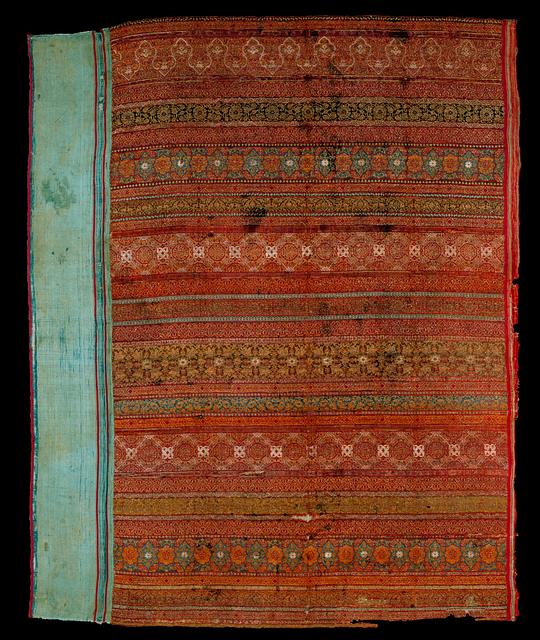
Kjeld von Folsach: “A set of silk panels from the Mongol period” in Sheila Blair and Jonathan Bloom (eds.): God is beautiful and loves beauty: the object in Islamic art and culture, New Haven 2013, p. 216, and p. 231, fig. 220;
Institute of Ismaili Studies: Encounters in Muslim History, Student reader 1, London 2013, (reprint. 2017), p. 210;
Louise W. Mackie: Symbols of power: luxury textiles from Islamic lands, 7th–21st century, Cleveland 2015, fig. 6.15, pp. 230-31;
Anne Dunlop: “Ornament and vice: the foreign, the mobile, and the Cocharelli fragments” in Gülru Necipoglu and Alina Paynes (eds.): Histories of ornament: from global to local, Princeton 2016, fig. 18.6, p. 234;
Kjeld von Folsach, Joachim Meyer: The Human Figure in Islamic Art – Holy Men, Princes, and Commoners, The David Collection, Copenhagen 2017, fig. 21, p. 66;
Susan Whitfield (ed.): Silk Roads: peoples, cultures, landscapes, London 2019, fig. 3, p. 17;
Eiren L. Shea: Mongol court dress, identity formation, and global exchange, Abingdon 2020, p. 135, fig. 5.6;
Robert Hillenbrand: The Great Mongol Shahnama, London 2022, fig. 7.9, p. 173;
Kjeld von Folsach: “Pax Mongolica : an Ilkhanid tapestry-woven roundel” in Hali, 85, March–April 1996, pp. 80–87, 117 : ill.;
Robert Hillenbrand: Islamic art and architecture, London 1999, fig. 159, p. 203;
Kjeld von Folsach: Art from the World of Islam in The David Collection, Copenhagen 2001, cat.no. 642;
Linda Komaroff and Stefano Carboni (eds.): The legacy of Genghis Khan: courtly art and culture in Western Asia, 1256-1353, Metropolitan Museum of Art, New York 2002, fig. 195, p. 168, cat.no. 72, pp. 260-261;
Jutta Frings (ed.): Dschingis Khan und seine Erben: das Weltreich der Mongolen, Kunst- und Ausstellungshalle der Bundesrepublik Deutschland, Bonn 2005, cat.no. 329, pp. 287-288;
Sheila S. Blair and Jonathan M. Bloom (eds.): Cosmophilia. Islamic Art from the David Collection, Copenhagen, McMullen Museum of Art, Boston College, Boston 2006,cat.no. 3;
Kjeld von Folsach: For the Privileged Few: Islamic Miniature Painting from The David Collection, Louisiana,, Humlebæk 2007, p. 23, fig. 2;
Tanya Treptow and Donald Whitcomb: Daily life ornamented: the medieval Persian city of Rayy, Oriental Institute Museum of the University of Chicago, Chicago 2007, p. 21;
Yuka Kadoi: Islamic chinoiserie: the art of Mongol Iran, Edinburgh 2009, fig. 1.13, pp. 30-31;
Oliver Watson: “The case of the Ottoman table” in Journal of the David Collection, 2010, 3, fig. 28, p. 41;
Lorenz Korn: “A tubular bronze object from Khurasan” in Venetia Porter and Mariam Rosser-Owens (eds.): Metalwork and material culture in the Islamic world : art, craft and text : essays presented to James W. Allan, London 2012, note 13, p. 153 (no photo);
Kjeld von Folsach: “A set of silk panels from the Mongol period” in Sheila Blair and Jonathan Bloom (eds.): God is beautiful and loves beauty: the object in Islamic art and culture, New Haven 2013, p. 216, and p. 231, fig. 220;
Institute of Ismaili Studies: Encounters in Muslim History, Student reader 1, London 2013, (reprint. 2017), p. 210;
Louise W. Mackie: Symbols of power: luxury textiles from Islamic lands, 7th–21st century, Cleveland 2015, fig. 6.15, pp. 230-31;
Anne Dunlop: “Ornament and vice: the foreign, the mobile, and the Cocharelli fragments” in Gülru Necipoglu and Alina Paynes (eds.): Histories of ornament: from global to local, Princeton 2016, fig. 18.6, p. 234;
Kjeld von Folsach, Joachim Meyer: The Human Figure in Islamic Art – Holy Men, Princes, and Commoners, The David Collection, Copenhagen 2017, fig. 21, p. 66;
Susan Whitfield (ed.): Silk Roads: peoples, cultures, landscapes, London 2019, fig. 3, p. 17;
Eiren L. Shea: Mongol court dress, identity formation, and global exchange, Abingdon 2020, p. 135, fig. 5.6;
Robert Hillenbrand: The Great Mongol Shahnama, London 2022, fig. 7.9, p. 173;