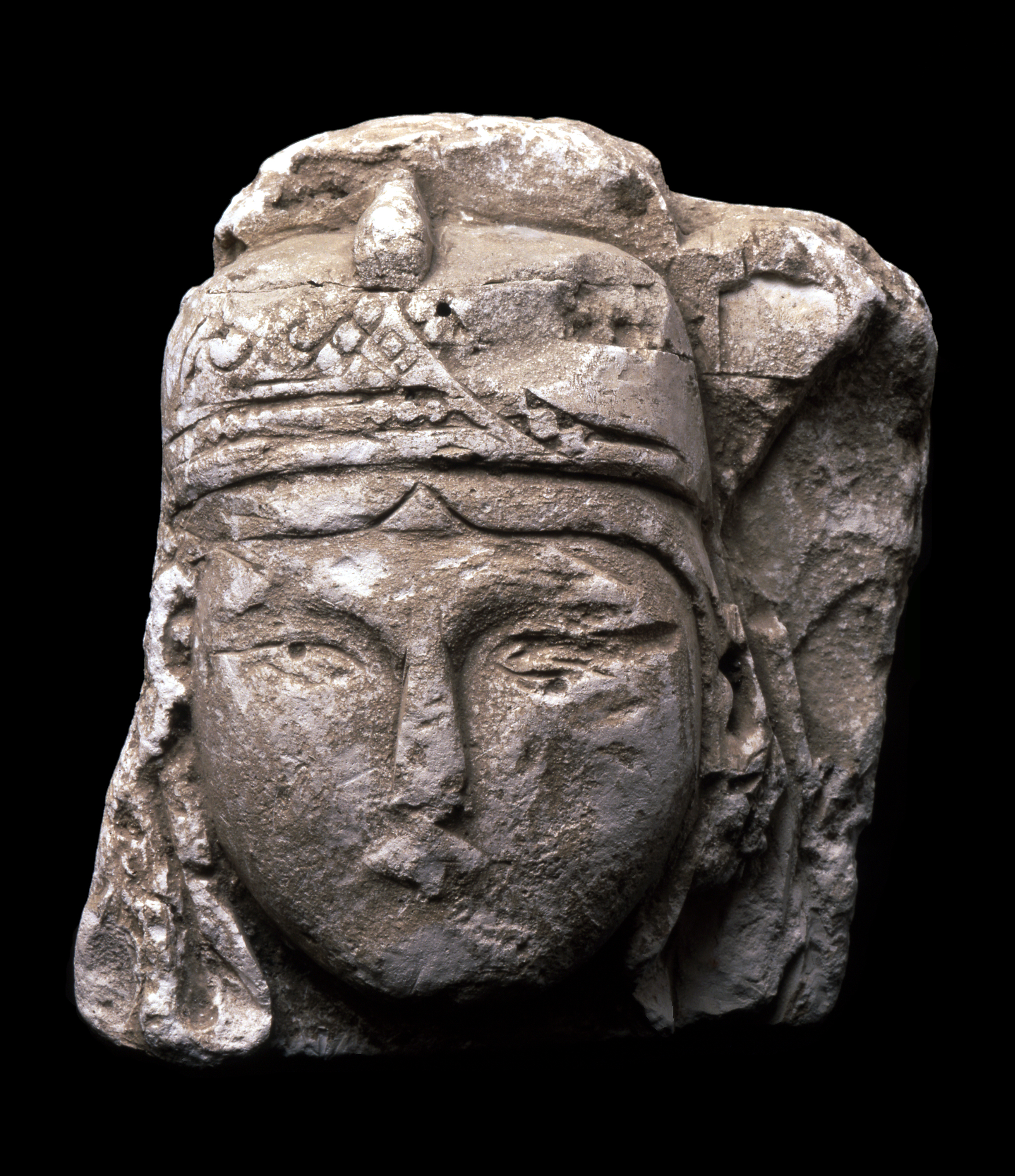
Head, carved stucco
Iran; 12th-13th century
H: 23.5; W: 21 cm
Inventory number 44/1978
Stucco was a favorite material for decorating architecture from the earliest Islamic period. Several of the Umayyad hunting lodges in Palestine from the 8th century had interiors decorated with human figures in stucco, including princes and more or less scantily clad dancing girls.
Related courtly scenes were repeated in stucco decorations under the Seljuks and were also found on contemporary ceramics and metalwork. Figurative stucco decorations were only used in secular buildings, never in mosques or religious institutions.
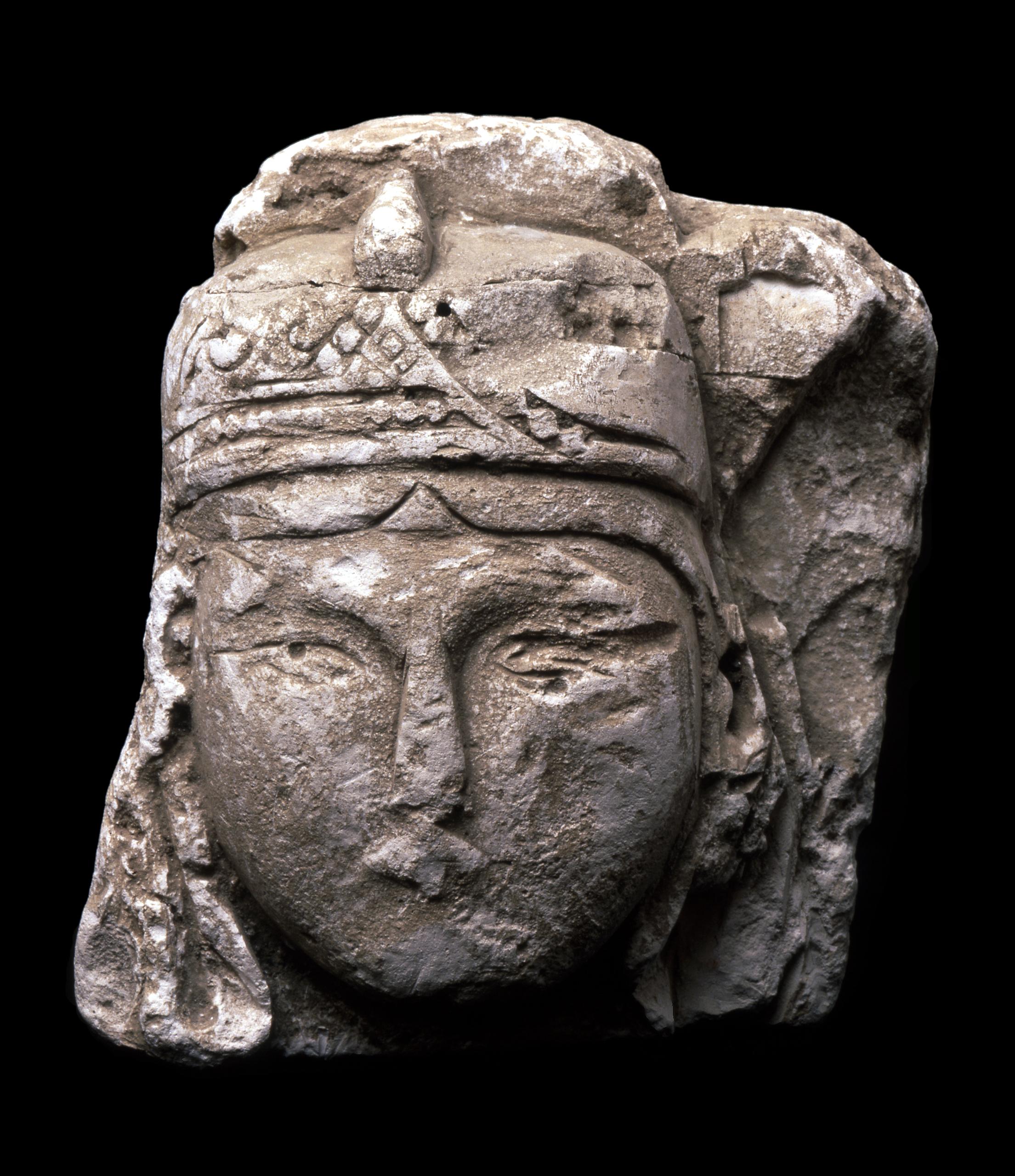
This head was originally part of a large relief that probably also included its body.
Related courtly scenes were repeated in stucco decorations under the Seljuks and were also found on contemporary ceramics and metalwork. Figurative stucco decorations were only used in secular buildings, never in mosques or religious institutions.
This head was originally part of a large relief that probably also included its body.
Published in
Published in
Art from the World of Islam. 8th-18th century, Louisiana, Humlebæk 1987, cat.no. 98;
Kjeld von Folsach: Islamic art. The David Collection, Copenhagen 1990, cat.no. 275;
Kjeld von Folsach: Art from the World of Islam in The David Collection, Copenhagen 2001, cat.no. 397;
Kjeld von Folsach: Islamic art. The David Collection, Copenhagen 1990, cat.no. 275;
Kjeld von Folsach: Art from the World of Islam in The David Collection, Copenhagen 2001, cat.no. 397;
.jpg)