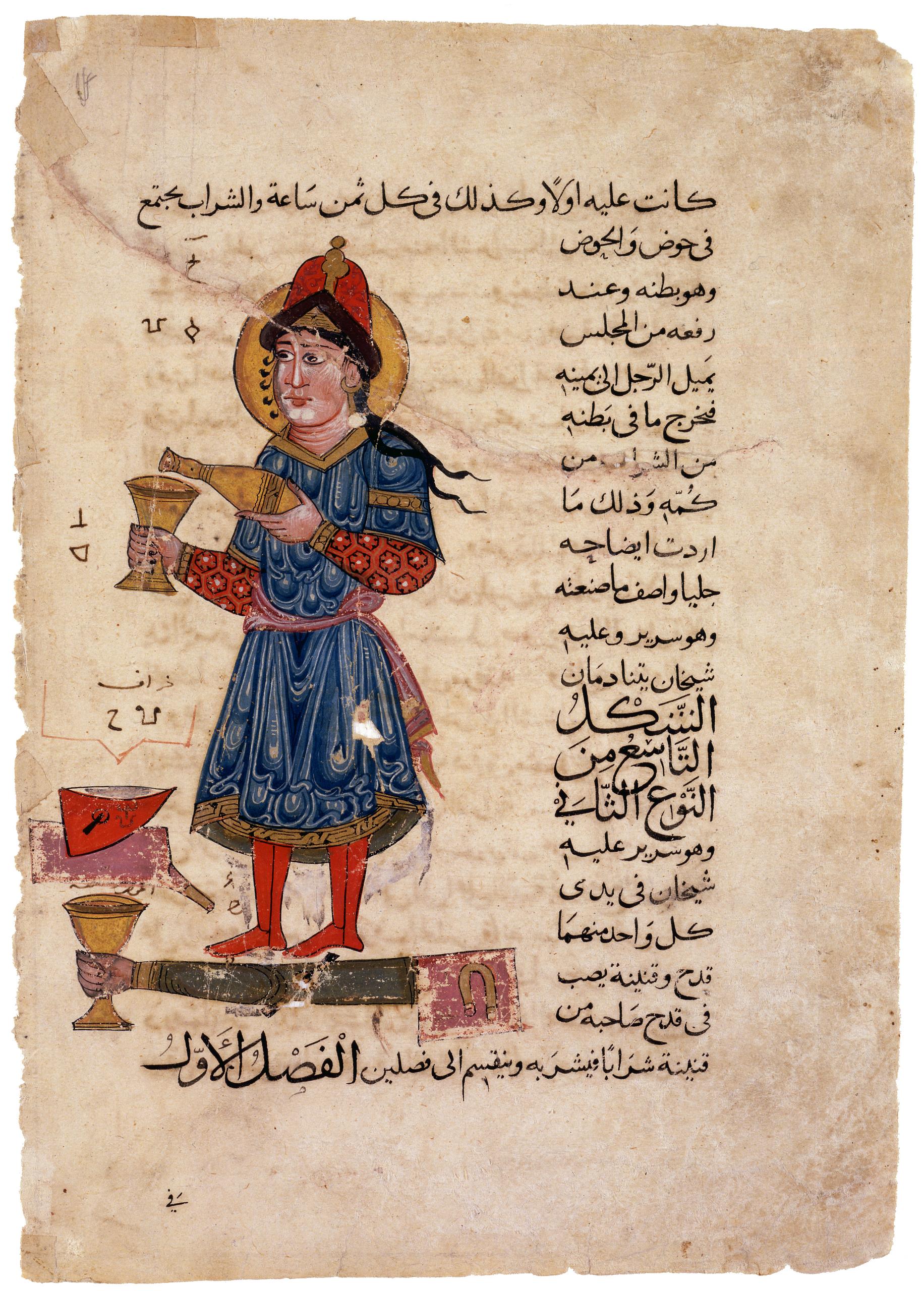
Miniature from a copy of al-Jazari’s Kitab fi marifat al-hiyal al-handasiyya. ‘Machine Pouring Wine’
Syria or Egypt; 1315
Leaf: 31.5 × 22 cm
Inventory number 20/1988
The mechanical genius al-Jazari was in the service of the Artuqids in Diyarbakir when he finished his Book of Knowledge of Ingenious Mechanical Devices in around 1205. It contained descriptions of humanoid metal robots like this one, but also door handles and combination locks quite similar to examples in the David Collection (38/1973 and 1/1984).
The manuscript was copied in 1315, and although the costume with the tiraz band around the sleeves and the distinctive hat are in accordance with contemporary Muslim fashions, the style, as in so much other ‘Arab painting,’ was influenced by the Christian painting tradition, as shown e.g. by the physiognomy, the halo, and the folds of the kirtle.
The manuscript was copied in 1315, and although the costume with the tiraz band around the sleeves and the distinctive hat are in accordance with contemporary Muslim fashions, the style, as in so much other ‘Arab painting,’ was influenced by the Christian painting tradition, as shown e.g. by the physiognomy, the halo, and the folds of the kirtle.
Published in
Published in
Sotheby’s, London 6/12 1967, lot 18;
Theodore Bowie: Islamic Art Across the World. An Exhibition, Indiana University Art Museum, Bloomington 1970, p. 32, cat. 38;
Ibn al-Razzâz al-Jazarî: The book of Knowledge of Ingenious Mechanical Devices (Kitâb fî ma'rifat al-hiyal al-handasiyya), transl. from Arabic and annotated by Donald R. Hill, Dordrecht 1974, pl. 17;
B. W. Robinson et al.: Persian and Mughal Art, Colnaghi, London 1976, cat. 4;
Theodore Bowie: Islamic Art Across the World. An Exhibition, Indiana University Art Museum, Bloomington 1970, p. 32, cat. 38;
Ibn al-Razzâz al-Jazarî: The book of Knowledge of Ingenious Mechanical Devices (Kitâb fî ma'rifat al-hiyal al-handasiyya), transl. from Arabic and annotated by Donald R. Hill, Dordrecht 1974, pl. 17;
B. W. Robinson et al.: Persian and Mughal Art, Colnaghi, London 1976, cat. 4;
Art from the World of Islam. 8th-18th Century, Louisiana Museum of Modern Art, Humlebæk 1987, cat. 152;
Kjeld von Folsach: Islamic Art. The David Collection, Copenhagen 1990, cat. 19;
Kjeld von Folsach, Torben Lundbæk og Peder Mortensen (red.): Sultan, Shah and Great Mughal. The History and Culture of the Islamic World, National Museum, Copenhagen 1996, cat. 83;
Kjeld von Folsach: Art from the World of Islam in the David Collection, Copenhagen 2001, cat. 24;
Ahmed Djebbar (ed.): L'age d'or des sciences arabes, Institut du monde arabe, Paris 2005, p. 273, cat. 47;
Kjeld von Folsach: For the Privileged Few. Islamic Miniature Painting from The David Collection, Louisiana Museum of Modern Art, Humlebæk 2007, cat. 5;
Jacqueline du Pasquier: Histoire du verre. Les chefs-d'oeuvre de l'islam, Paris 2007, pp. 14-15 ;
Hossam Elkhadem: À la découverte de l'age d'or des sciences arabes. Catalogue de l'exposition itinérante, Université libre, Brussels, 2009, p. 117 ;
Andrea Gropp, Werner Pöhling (ed.): Häuser der Weisheit. Wissenschaft im goldenen Zeitalter des Islam, Kultur- und Stadthistorisches Museum Duisburg, Mainz am Rhein 2015, fig. 11, p. 15;
Kjeld von Folsach og Joachim Meyer: The Human Figure in Islamic Art. Holy Men, Princes and Commoners, The David Collection, Copenhagen 2017, cat. 18;
Christian Høgel and Saer El-Jaichi: Arabisk filosofi, Aarhus 2020, p. 110;
Doris Behrens-Abouseif: Dress and Dress Code in Medieval Cairo. A Mamluk Obsession, Leiden 2024, fig. 15, pp. 110, 112;
Kjeld von Folsach, Torben Lundbæk og Peder Mortensen (red.): Sultan, Shah and Great Mughal. The History and Culture of the Islamic World, National Museum, Copenhagen 1996, cat. 83;
Kjeld von Folsach: Art from the World of Islam in the David Collection, Copenhagen 2001, cat. 24;
Ahmed Djebbar (ed.): L'age d'or des sciences arabes, Institut du monde arabe, Paris 2005, p. 273, cat. 47;
Kjeld von Folsach: For the Privileged Few. Islamic Miniature Painting from The David Collection, Louisiana Museum of Modern Art, Humlebæk 2007, cat. 5;
Jacqueline du Pasquier: Histoire du verre. Les chefs-d'oeuvre de l'islam, Paris 2007, pp. 14-15 ;
Hossam Elkhadem: À la découverte de l'age d'or des sciences arabes. Catalogue de l'exposition itinérante, Université libre, Brussels, 2009, p. 117 ;
Andrea Gropp, Werner Pöhling (ed.): Häuser der Weisheit. Wissenschaft im goldenen Zeitalter des Islam, Kultur- und Stadthistorisches Museum Duisburg, Mainz am Rhein 2015, fig. 11, p. 15;
Kjeld von Folsach og Joachim Meyer: The Human Figure in Islamic Art. Holy Men, Princes and Commoners, The David Collection, Copenhagen 2017, cat. 18;
Christian Høgel and Saer El-Jaichi: Arabisk filosofi, Aarhus 2020, p. 110;
Doris Behrens-Abouseif: Dress and Dress Code in Medieval Cairo. A Mamluk Obsession, Leiden 2024, fig. 15, pp. 110, 112;
Miniature Paintings
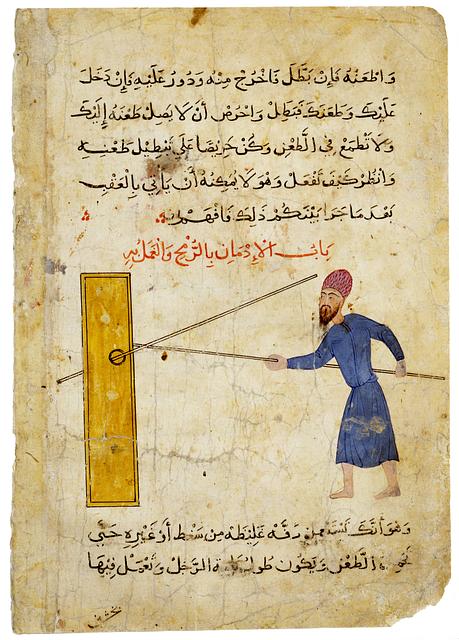
Miniature from a furusiyya manuscript. ‘A Mamluk Training with a Lance’
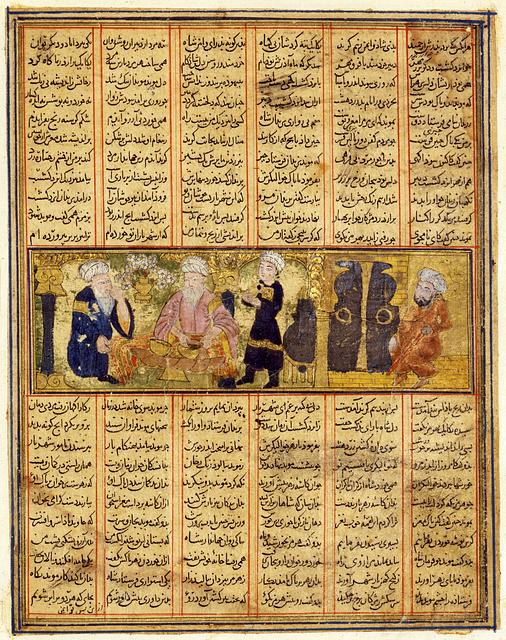
Miniature from a copy of Firdawsi’s Shahnama. ‘Mubad-i Mubadan Brings Food to the Captive Vizier Izad-i Gashasp’
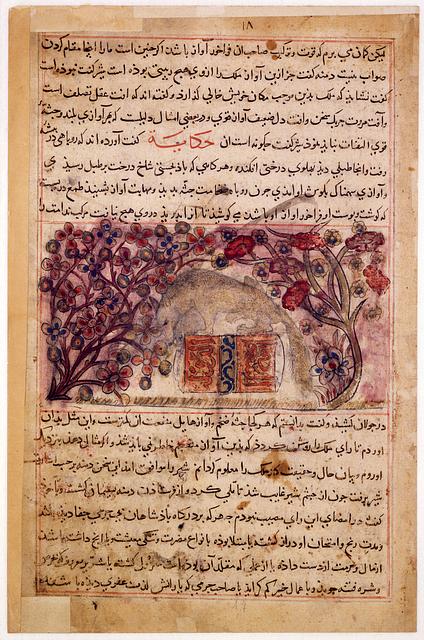
Miniature from a copy of Bidpai’s Kalila wa Dimna. ‘The Fox and the Drum’
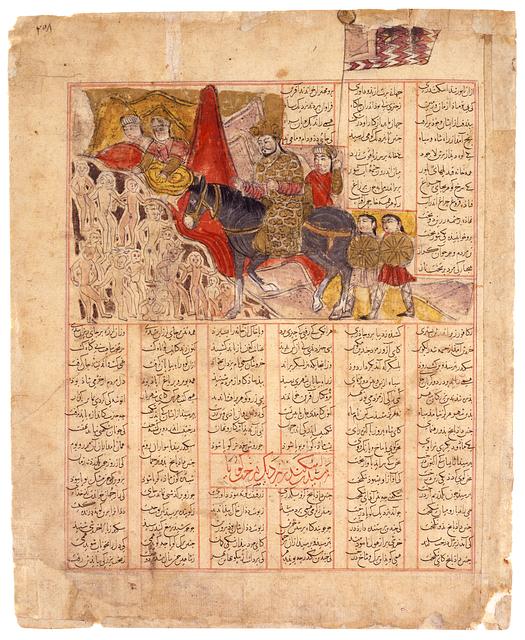
Miniature from a copy of Firdawsi’s Shahnama made for Qiwamuddawla wa’l-Din Hasan. ‘Iskandar Contemplates the Peoples Gog and Magog’