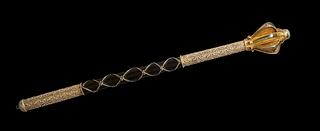
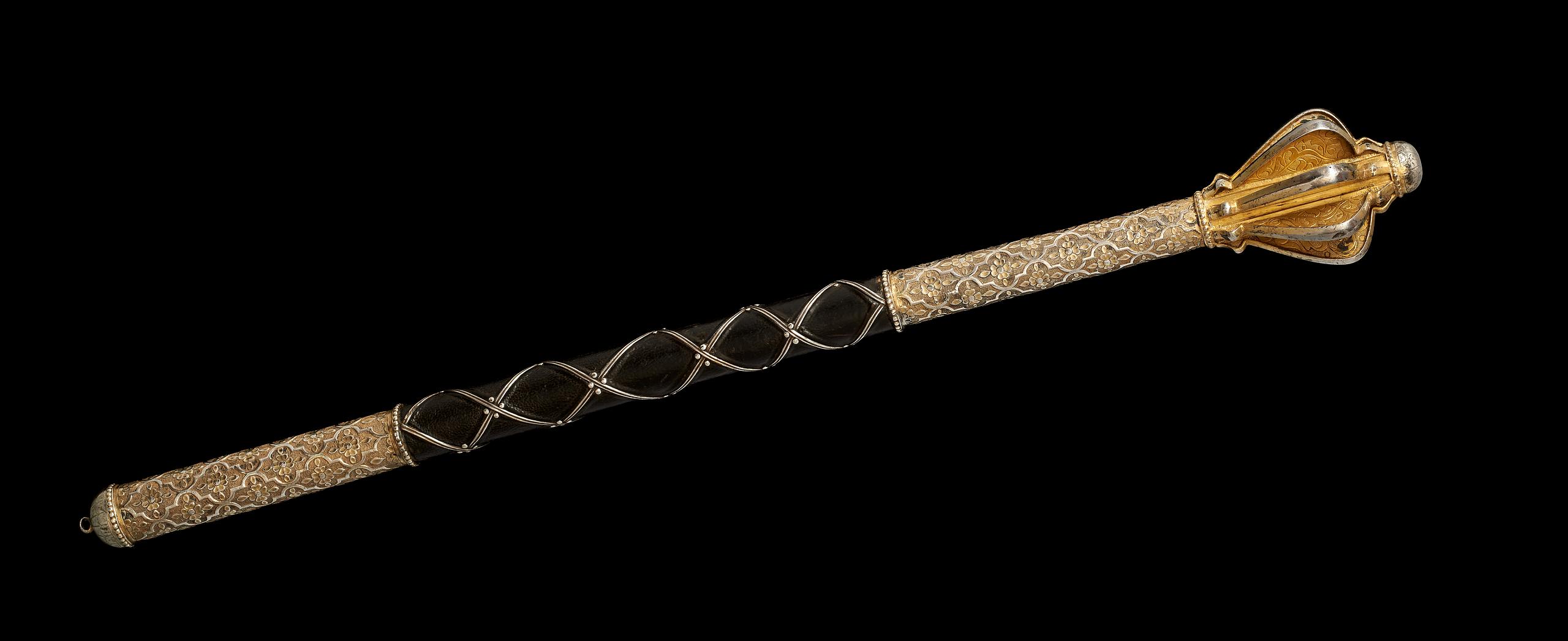
Mace head, silver and silver-gilt, chased and engraved; wooden handle covered with leather
Turkey; 17th century
L: 57.5 cm
Inventory number 88/2003
Maces were used as weapons by the Turkic peoples from ancient times and also in the Ottoman army in the 17th century.
Although the form of this mace is functional, it is a ceremonial piece. It belonged to a high-ranking officer in the Ottoman army and was a very conspicuous symbol of his position.
Several maces of more or less the same shape and combination of materials have been preserved, many of them in Western collections. They were taken as Türkenbeute when the Ottomans’ siege of Vienna failed in 1683.
Although the form of this mace is functional, it is a ceremonial piece. It belonged to a high-ranking officer in the Ottoman army and was a very conspicuous symbol of his position.
Several maces of more or less the same shape and combination of materials have been preserved, many of them in Western collections. They were taken as Türkenbeute when the Ottomans’ siege of Vienna failed in 1683.
Published in
Published in
Sotheby’s, London, 15/10-2003, lot 79;
Kjeld von Folsach, Joachim Meyer and Peter Wandel: Fighting, Hunting, Impressing. Arms and Armour from the Islamic World 1500-1850, The David Collection, Copenhagen 2021, cat.no 21;
Kjeld von Folsach, Joachim Meyer and Peter Wandel: Fighting, Hunting, Impressing. Arms and Armour from the Islamic World 1500-1850, The David Collection, Copenhagen 2021, cat.no 21;
Metalwork, Weapons and Jewelry
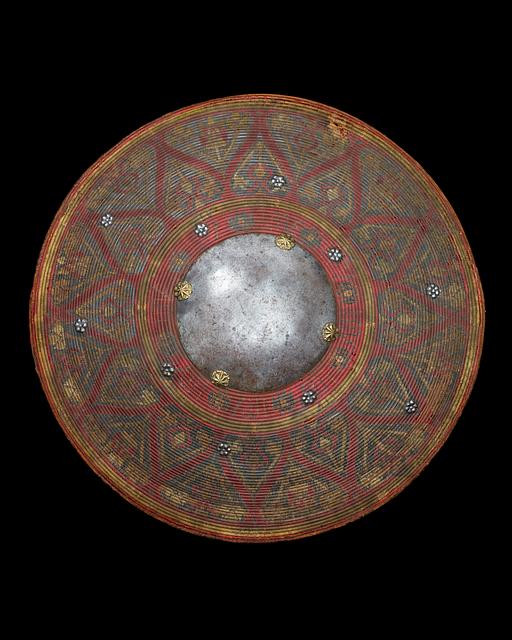
Wicker shield wrapped with colored silk and metal threads and with an umbo and metal fittings of steel and brass
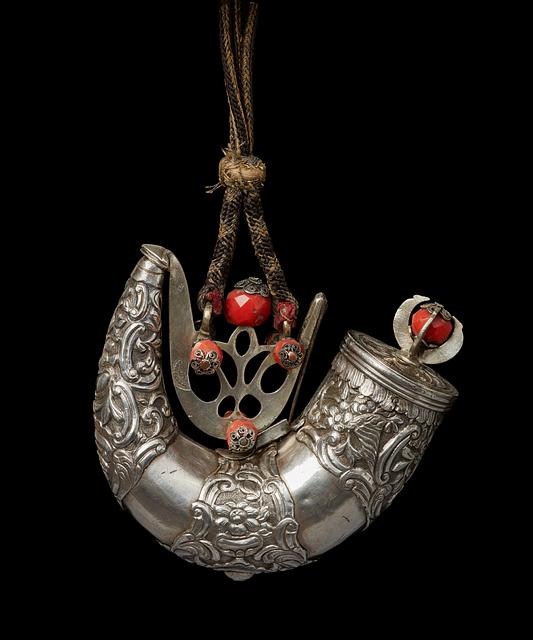
Powder horn, silver, with coral beads and the original hanging
.-The-David-Collection_Copenhagen_photo-Pernille-Klemp.jpg)
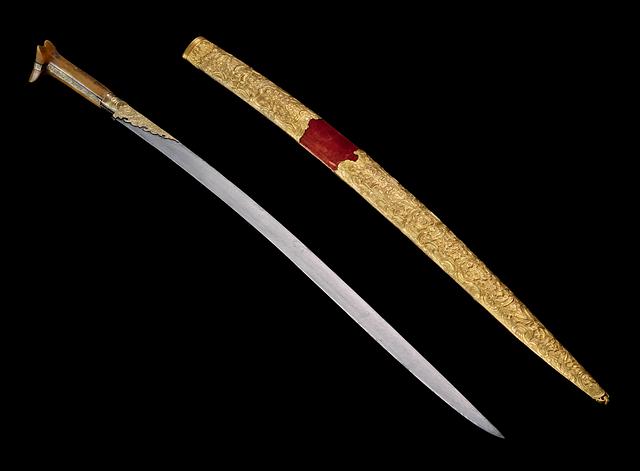
Short sword (yataghan) of steel, rhinoceros ivory and gold with scabbard of wood, textile, gold, and silver
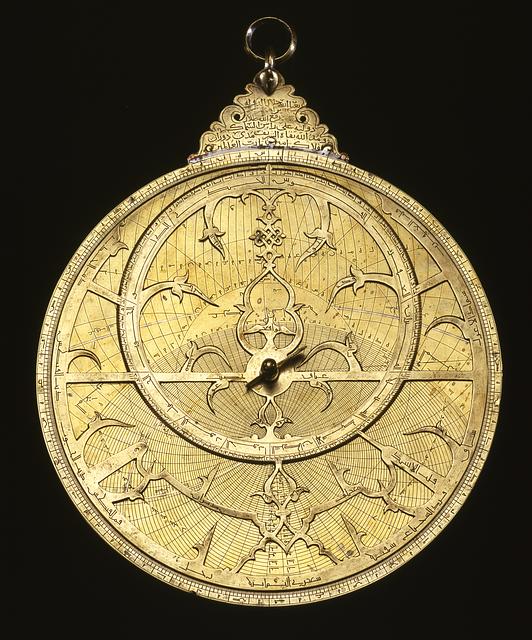
Astrolabe, brass, engraved and inlaid with silver